
Zatyshna Shelterbelt
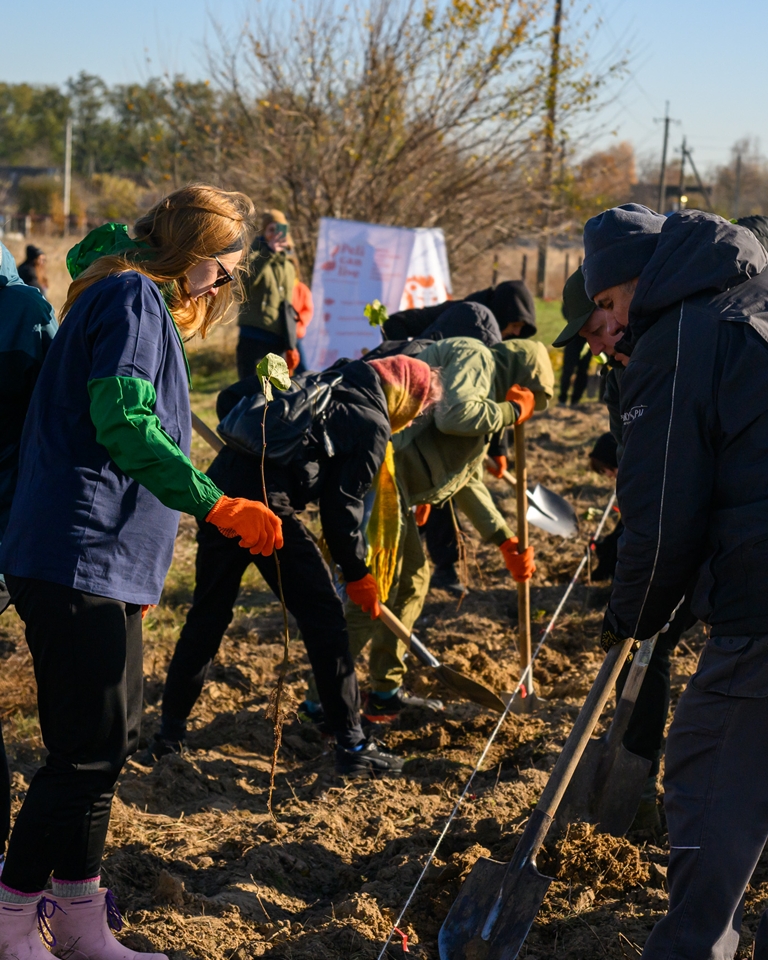
This is the first new shelterbelt that was created by the Shelterbelts of Life project team since the beginning of the full-scale invasion. The main stage of work took place on 5–8 November 2024 and marked the resumption of field planting after a three-year break. The shelterbelt is intended to protect the adjacent land and, over time, become a green landmark of Zatyshne.
Location: outskirts of Zatyshne village, Hirska Rural Territorial Community, Boryspil District, Kyiv Oblast
Coordinates: 50.28217, 30.85362
Type of work: establishment of a new shelterbelt
Date of the main stage of work: 5–8 November 2024
Length: 1.2 km
Number of rows: 3
Number of plants planted: 2,334 plants directly in the shelterbelt and 60 plants in the “Unbreakable Alley”.
Shelterbelt composition
According to the consolidated records, 16 tree and shrub species were planted on the site. The shelterbelt is primarily composed of small-leaved lime, rowan, blackcurrant, forsythia, Manchurian fir, cornelian cherry, hawthorn, common quince, dogwood and spirea. In April 2025, barberry and viburnum were added, while ginkgo, forsythia and variegated jasmine were planted in the “Unbreakable Alley”. In April 2026, the shelterbelt was supplemented with small-leaved lime, dogwood, spirea, pear and apple trees.
| Plant species | Main stage 05–08.11.2024 |
Additional planting and “Unbreakable Alley” 12.04.2025 |
Additional planting 27.04.2026 |
|---|---|---|---|
| Small-leaved lime | 800 | — | 36 |
| Common rowan | 192 | — | — |
| Blackcurrant | 200 | — | — |
| Forsythia | 416 | 20 | — |
| Manchurian fir | 3 | — | — |
| Cornelian cherry | 93 | 46 | — |
| Hawthorn | 45 | 46 | — |
| Common quince | 40 | — | — |
| Dogwood | 140 | — | 26 |
| Billard’s spirea | 160 | — | 14 |
| Pear tree | — | — | 39 |
| Apple tree | — | — | 10 |
| Barberry | — | 23 | — |
| Viburnum | — | 5 | — |
| Variegated jasmine | — | 20 | — |
| Ginkgo biloba | — | 20 | — |
| Total | 2 089 | 180 | 125 |
History of the shelterbelt
The history of the Zatyshna Shelterbelt began with an initiative by local activist Nataliia Kaplia. She proposed establishing a shelterbelt near Zatyshne village and brought together local residents, institutions, farmers and schools around the idea. Funding for the establishment of the shelterbelt was provided by ING Bank Ukraine.
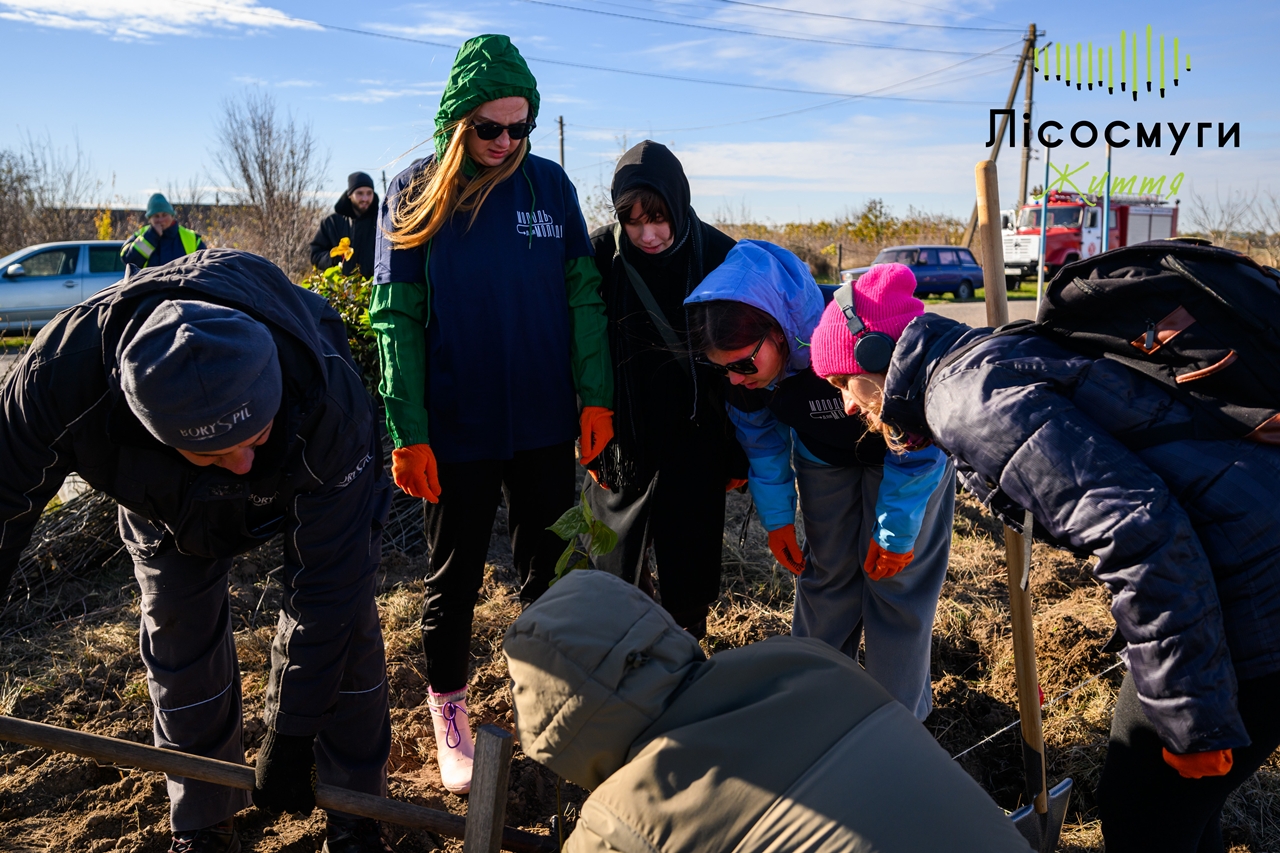
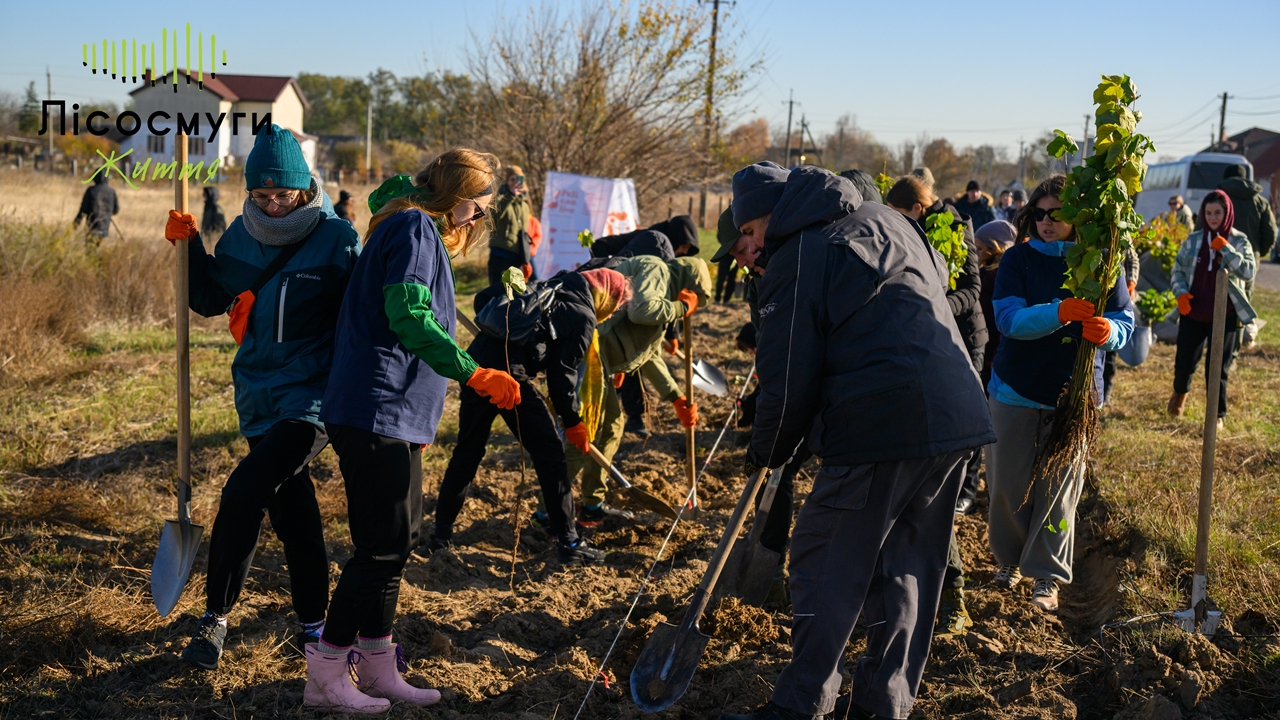
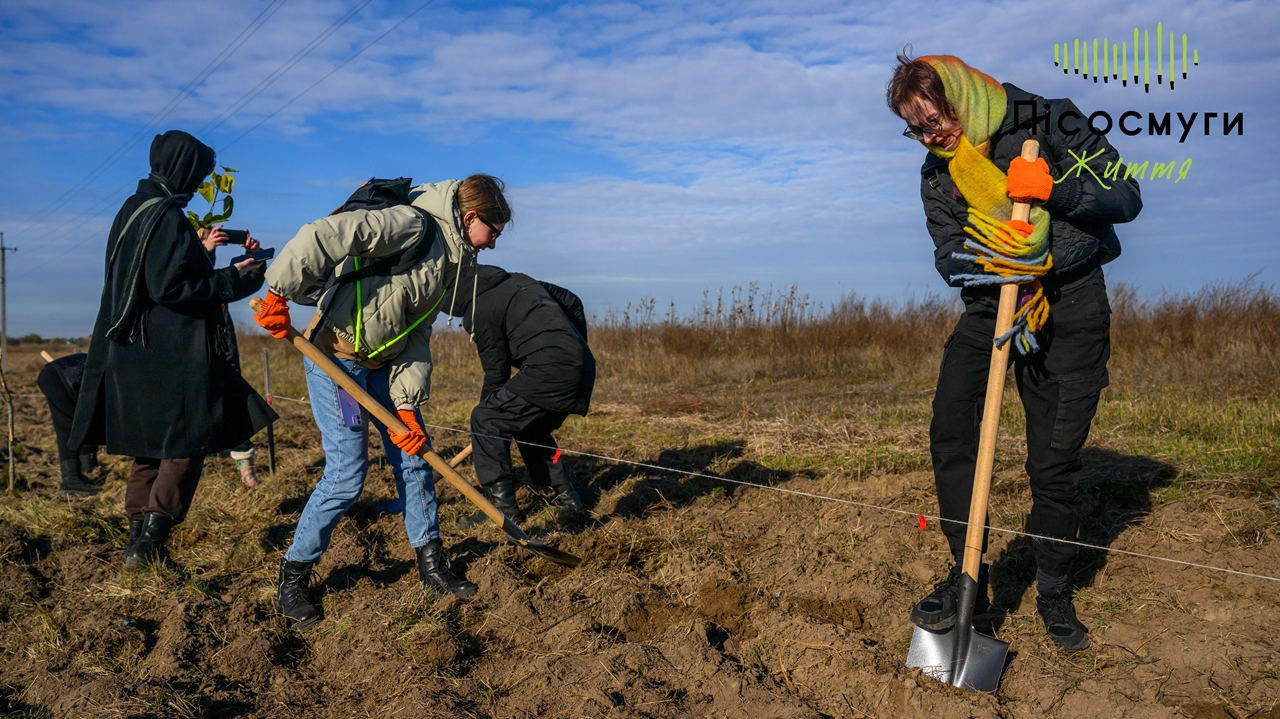
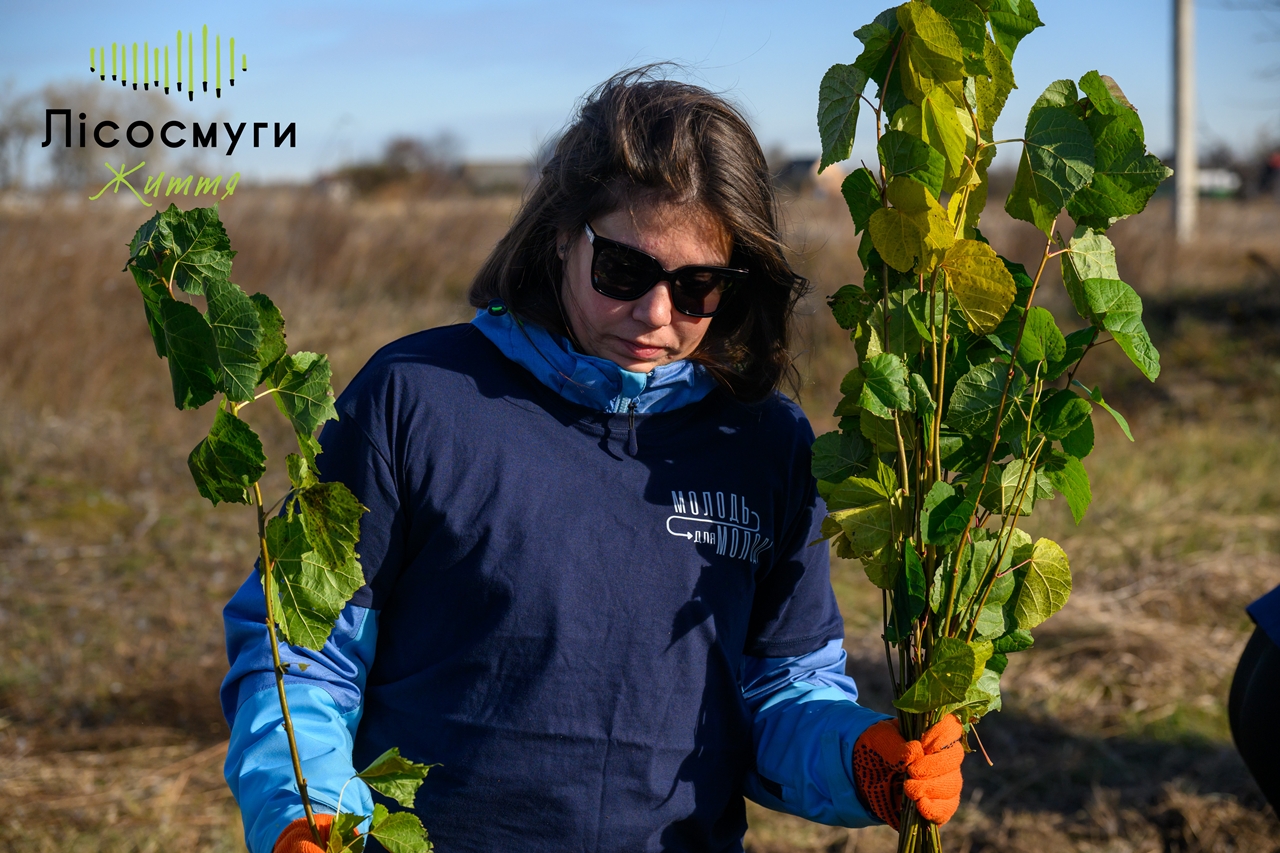
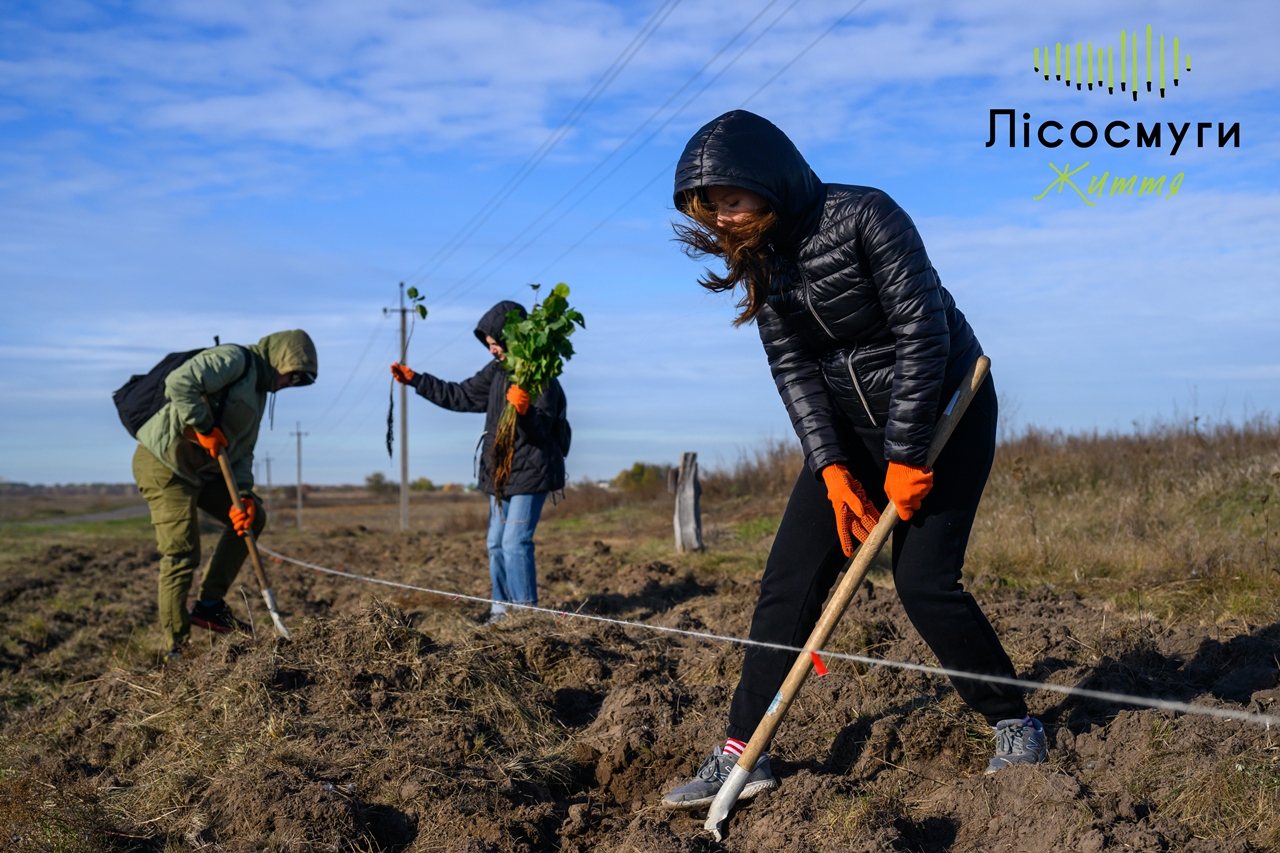
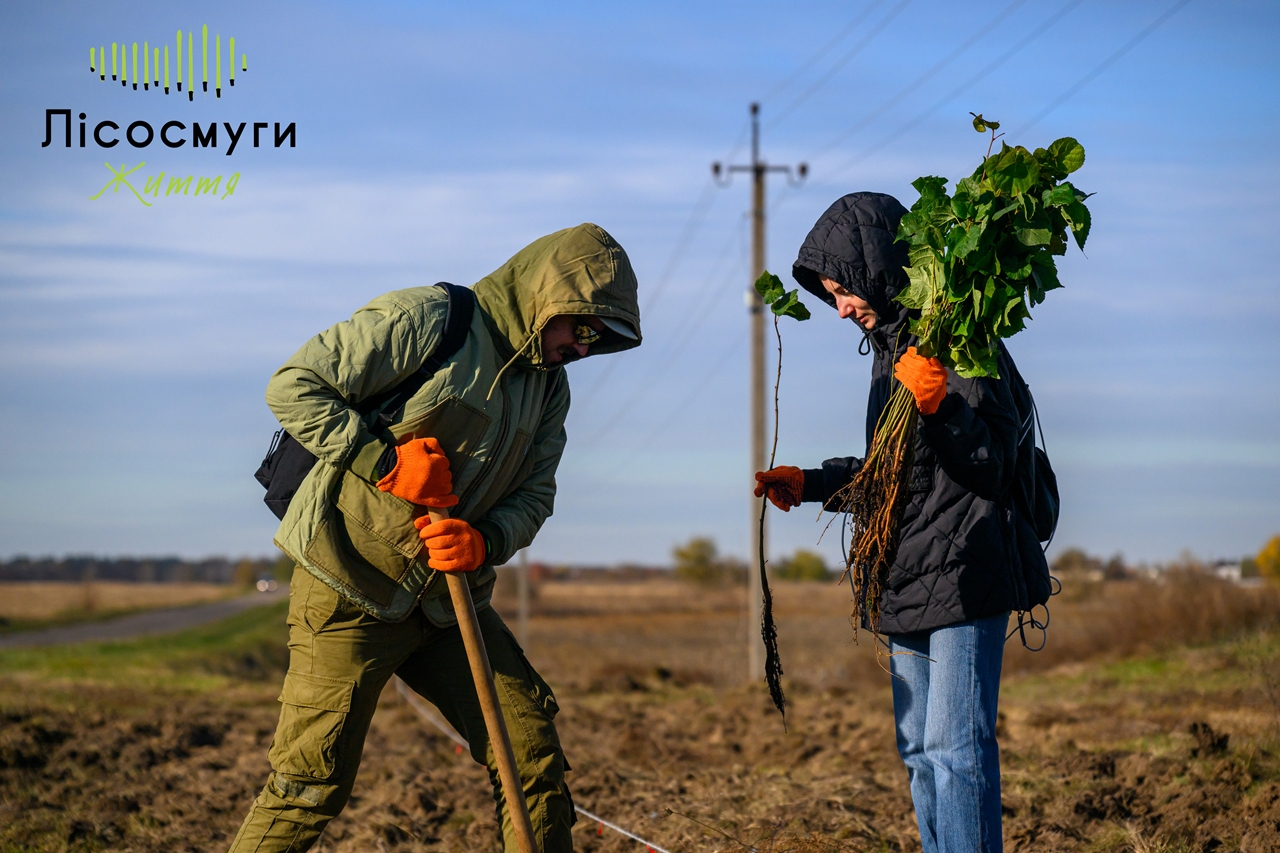
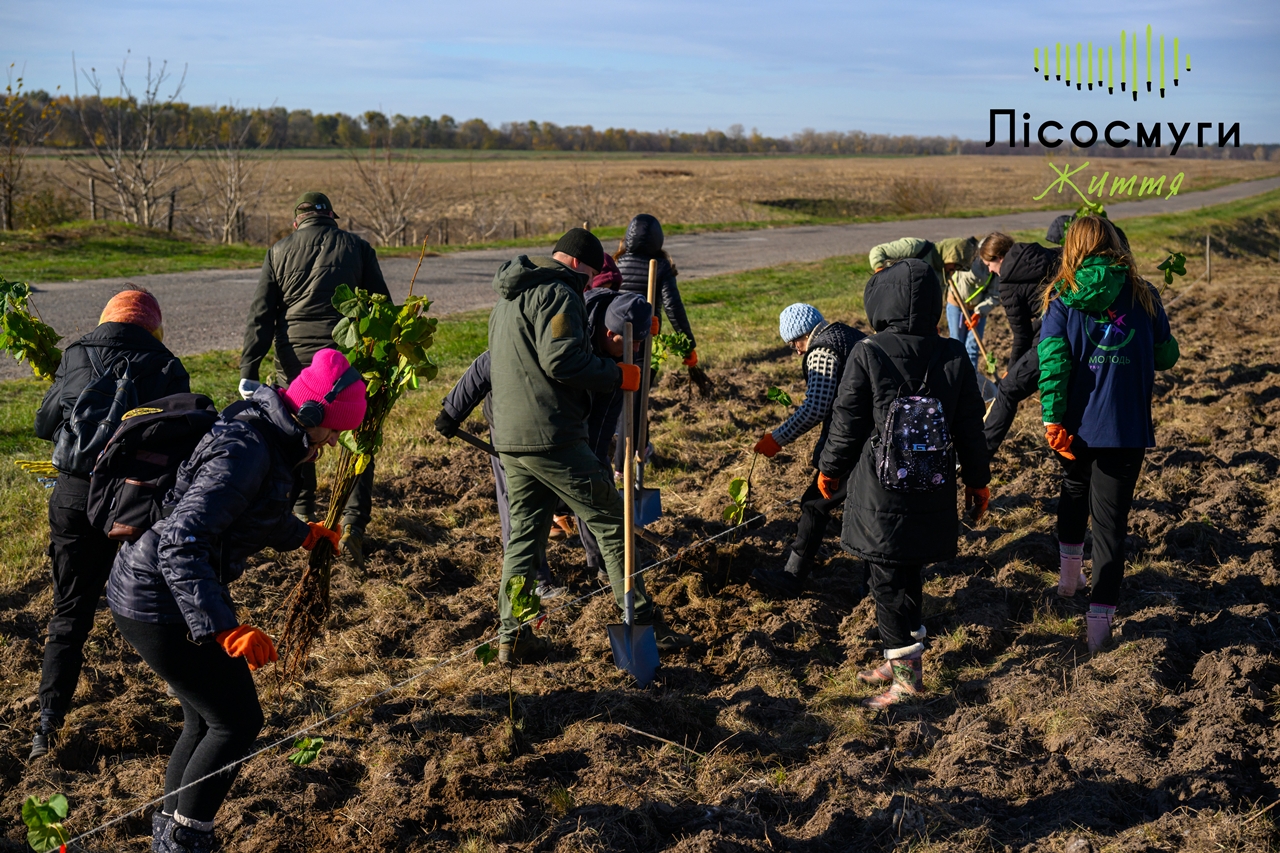
The main stage of work took place on 5–8 November 2024. Over four days, three rows were established along a 1.2-km-long site, and 2,089 trees and shrubs were planted. Planting material was provided by the Department of Forest Reproduction and Forest Melioration of the National University of Life and Environmental Sciences of Ukraine (NULES of Ukraine), Syrets Arboretum, the Kyiv Garden Plant Nursery, and the Department of Fruit Plants of the M. M. Gryshko National Botanical Garden of the National Academy of Sciences of Ukraine.
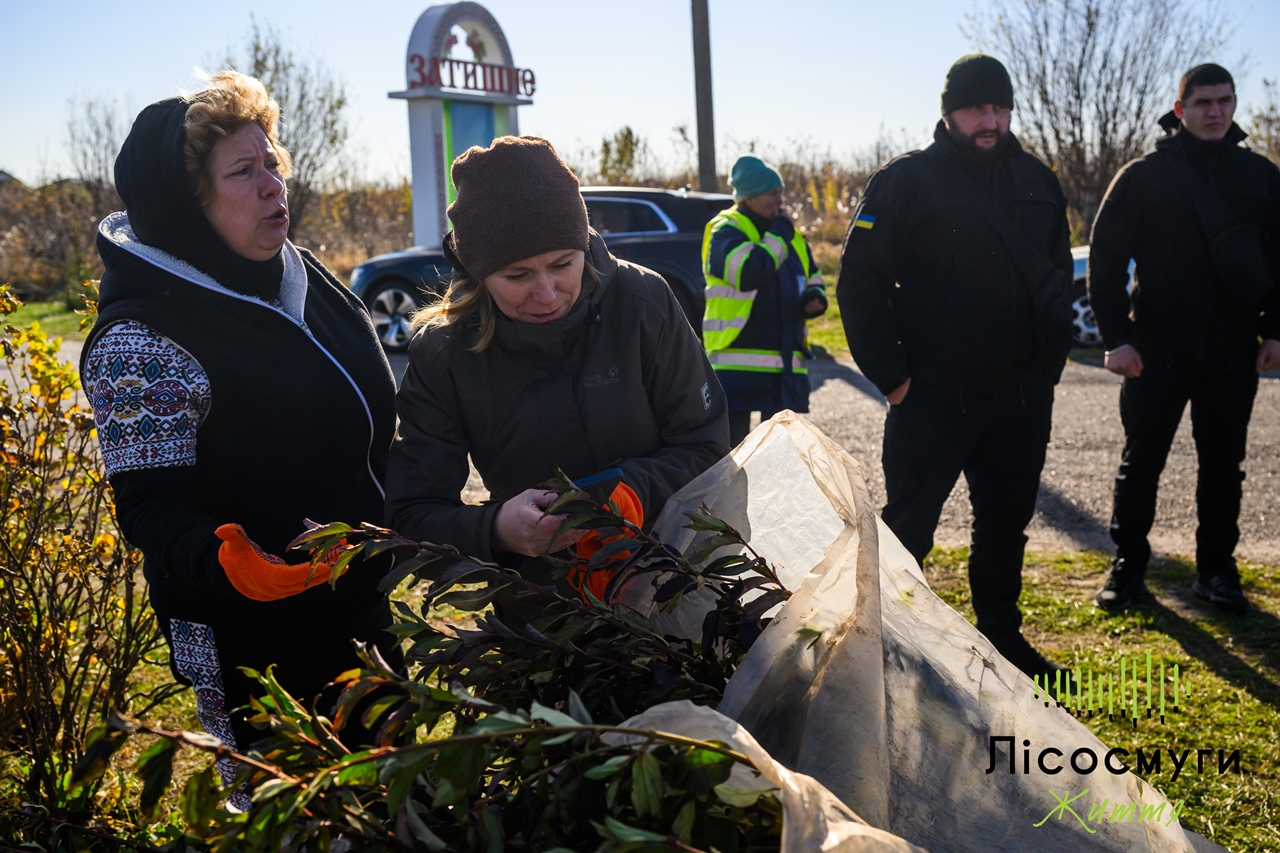
The municipal service of the Hirsk Rural Council and the Eldorado farming enterprise prepared the site. The rural council’s fire brigade delivered water and watered the young plants. Specialists from the “Ivankiv Forestry” and “Boryspil Forestry” branches of the State Enterprise “Forests of Ukraine” provided advice to the team and assisted with the planting.
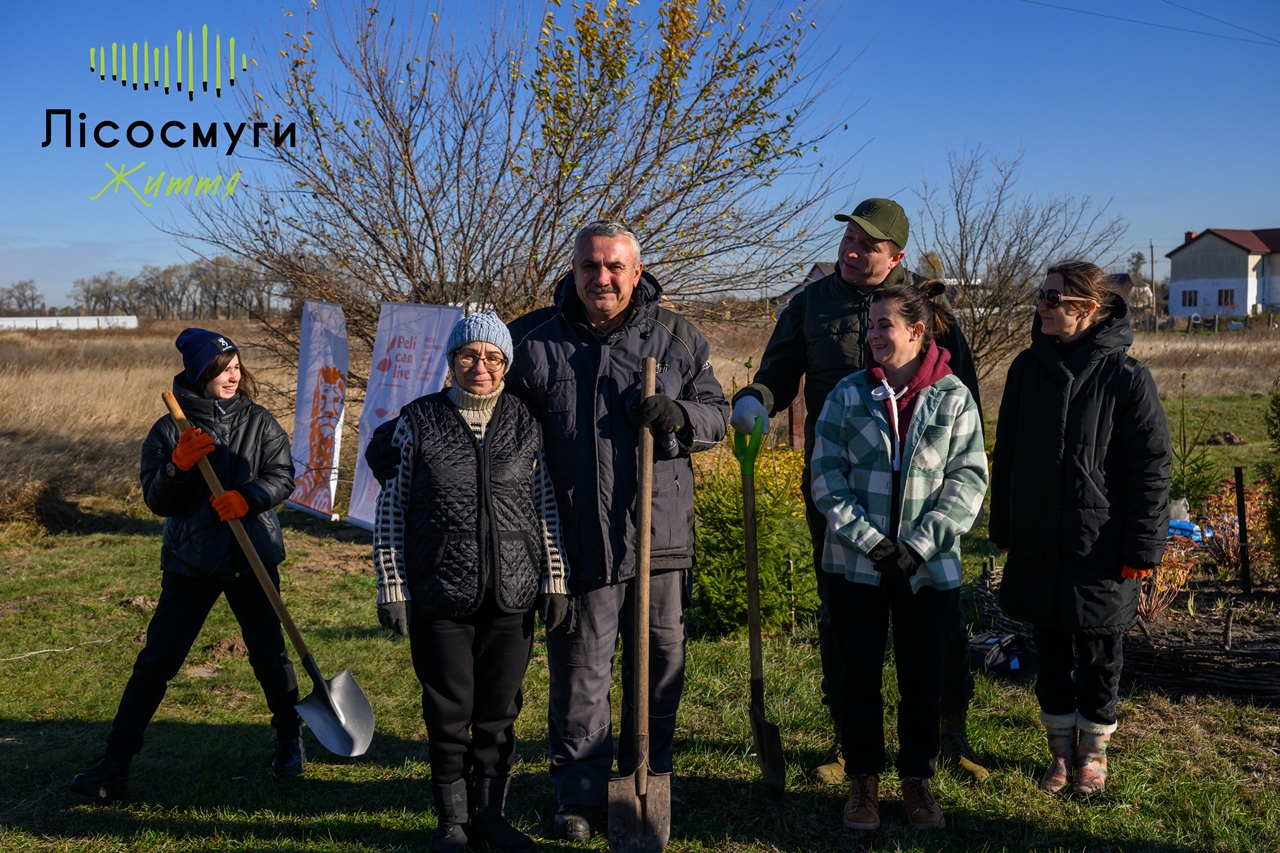
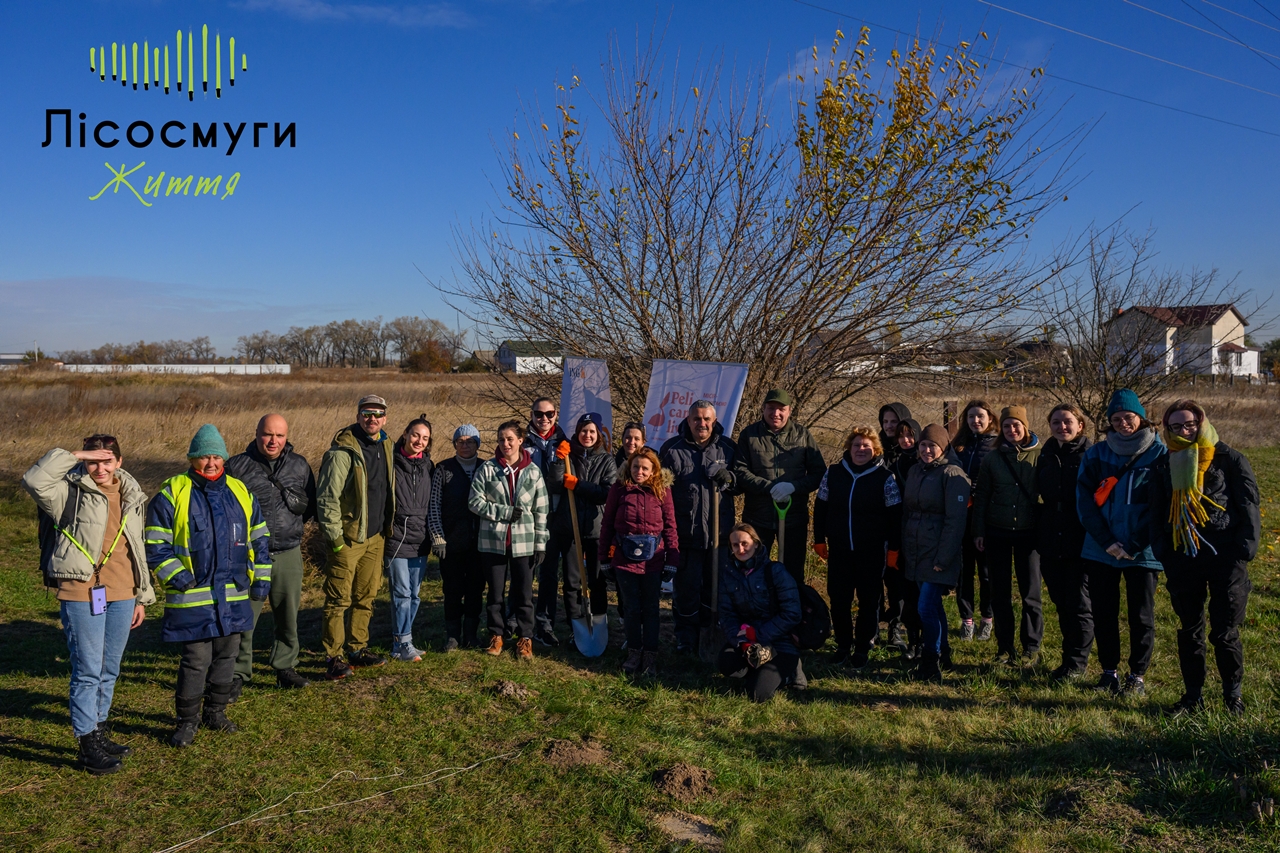
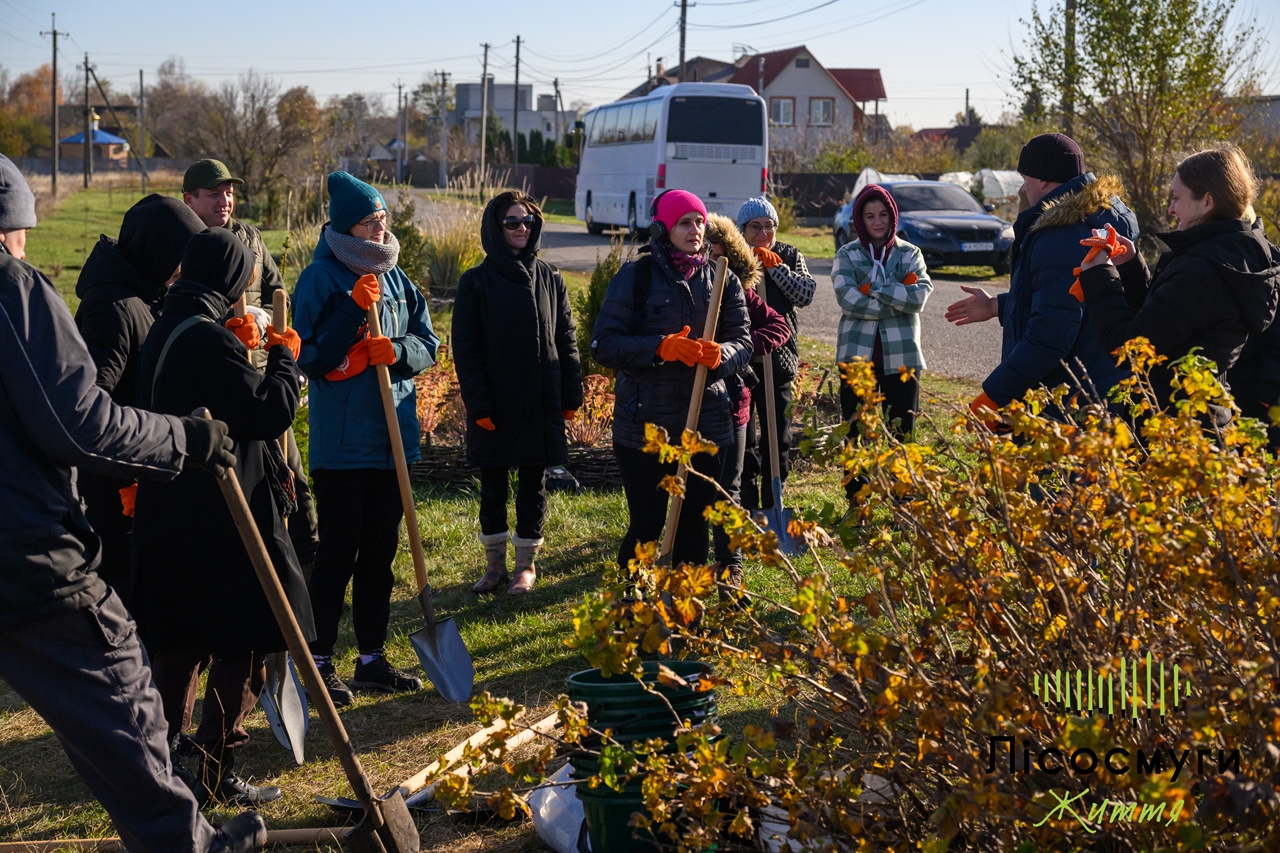
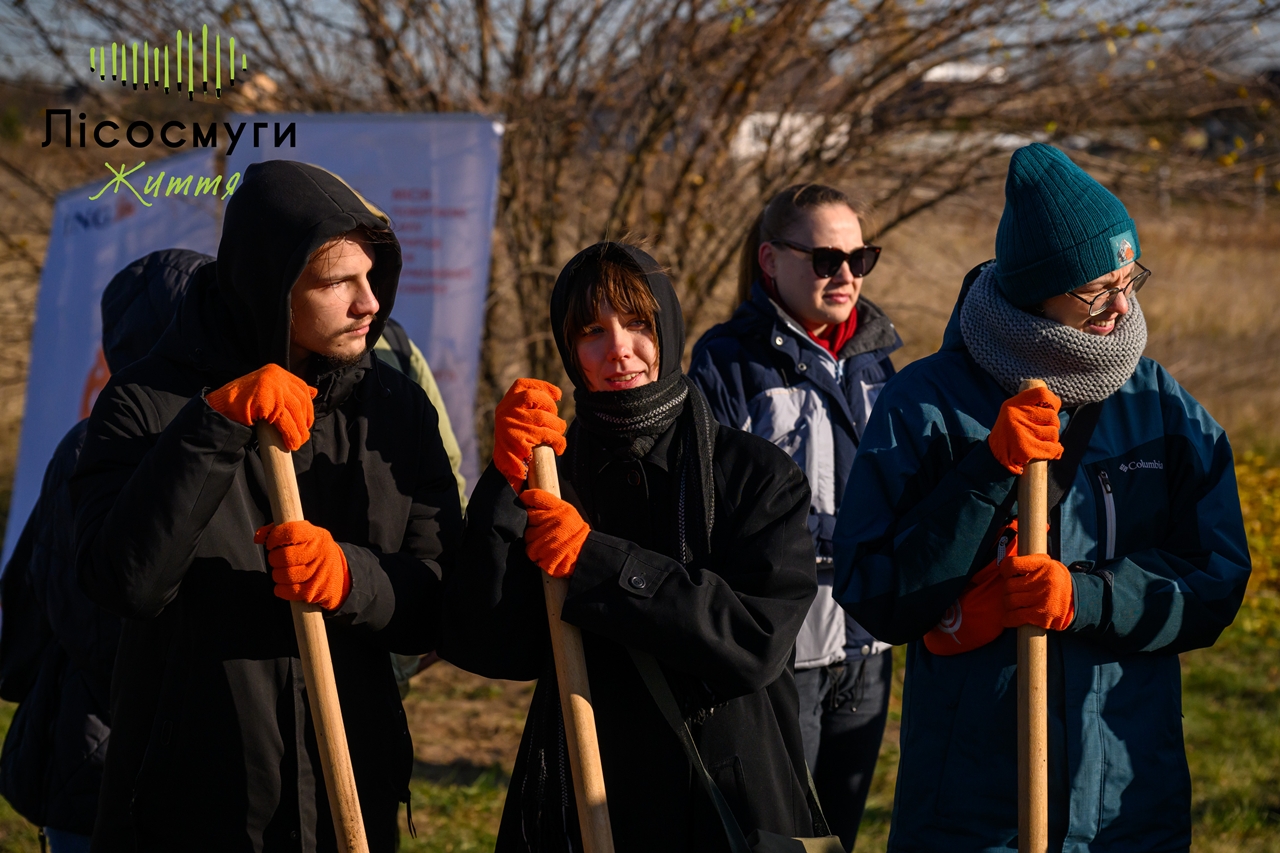
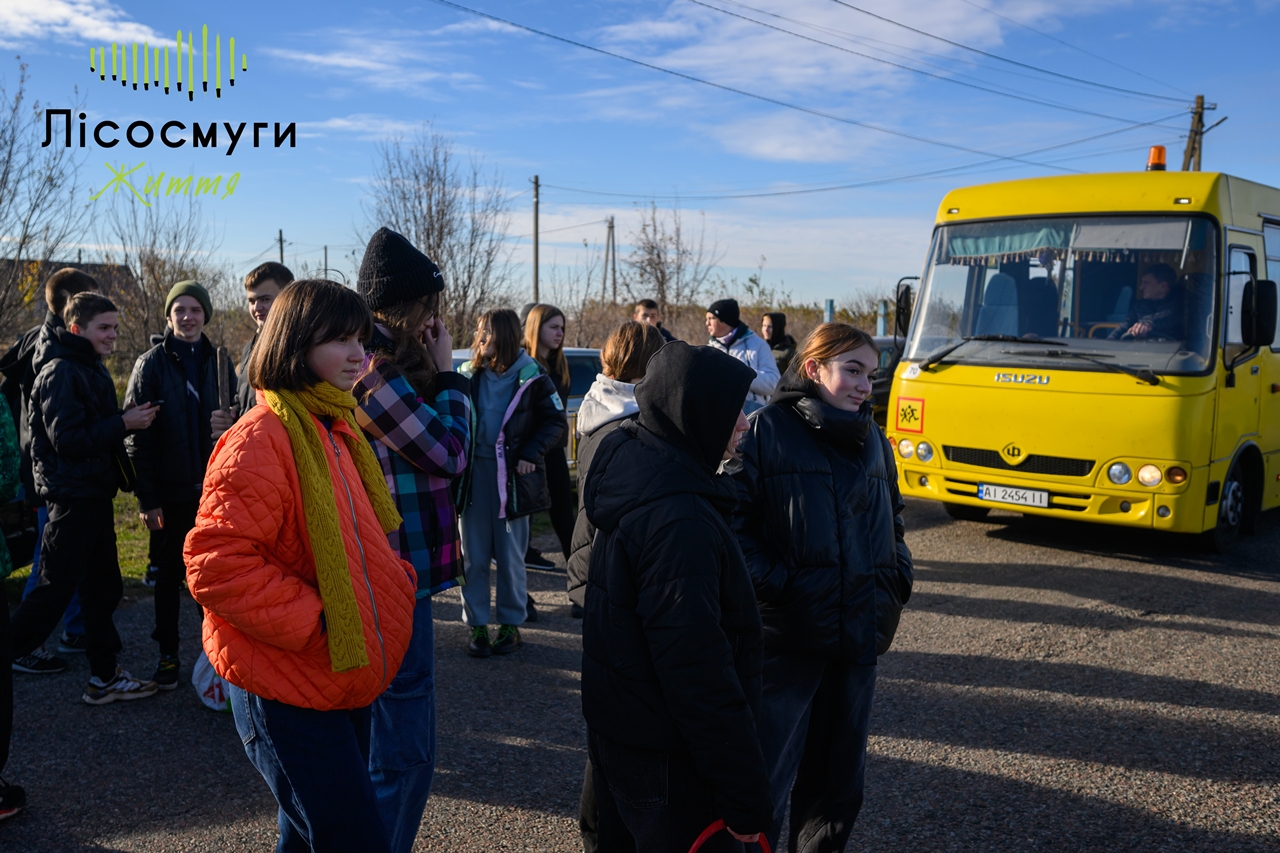
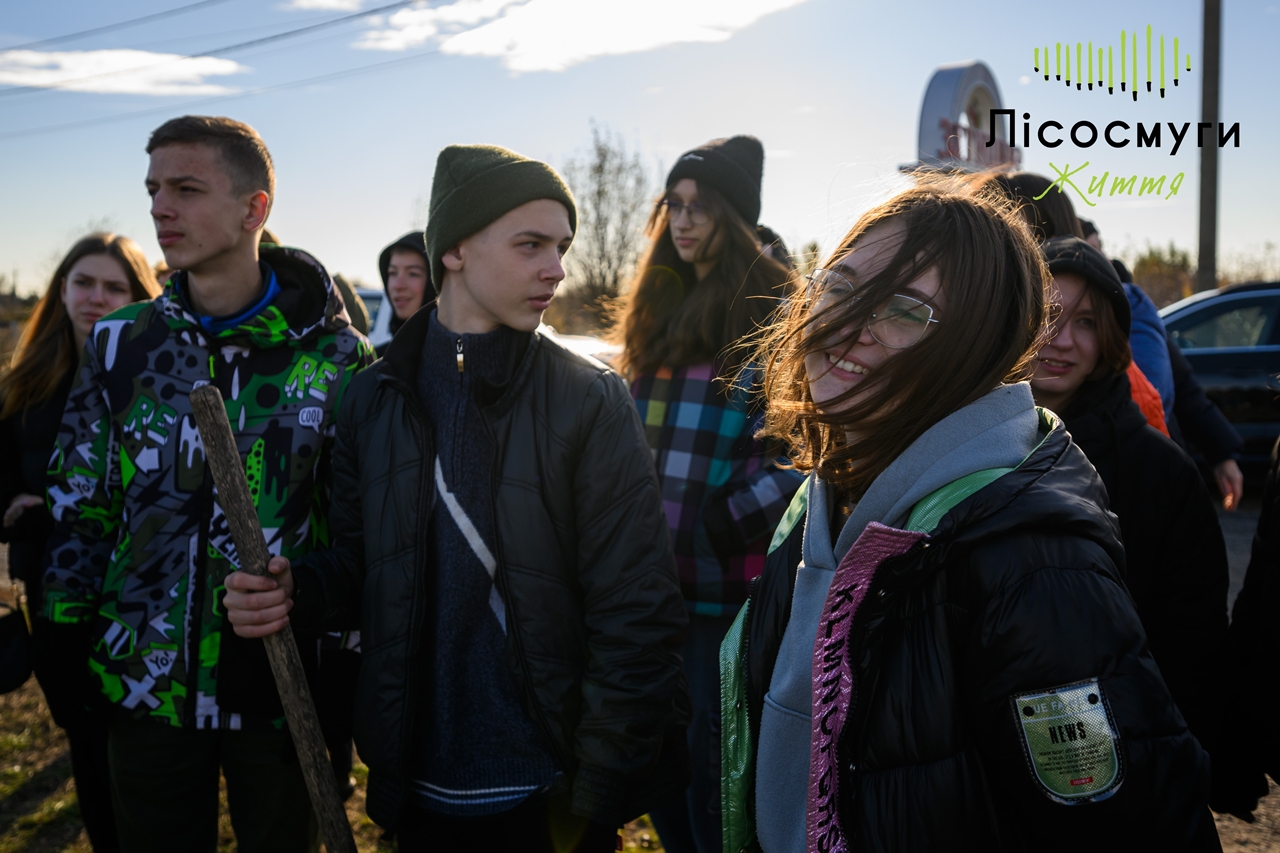
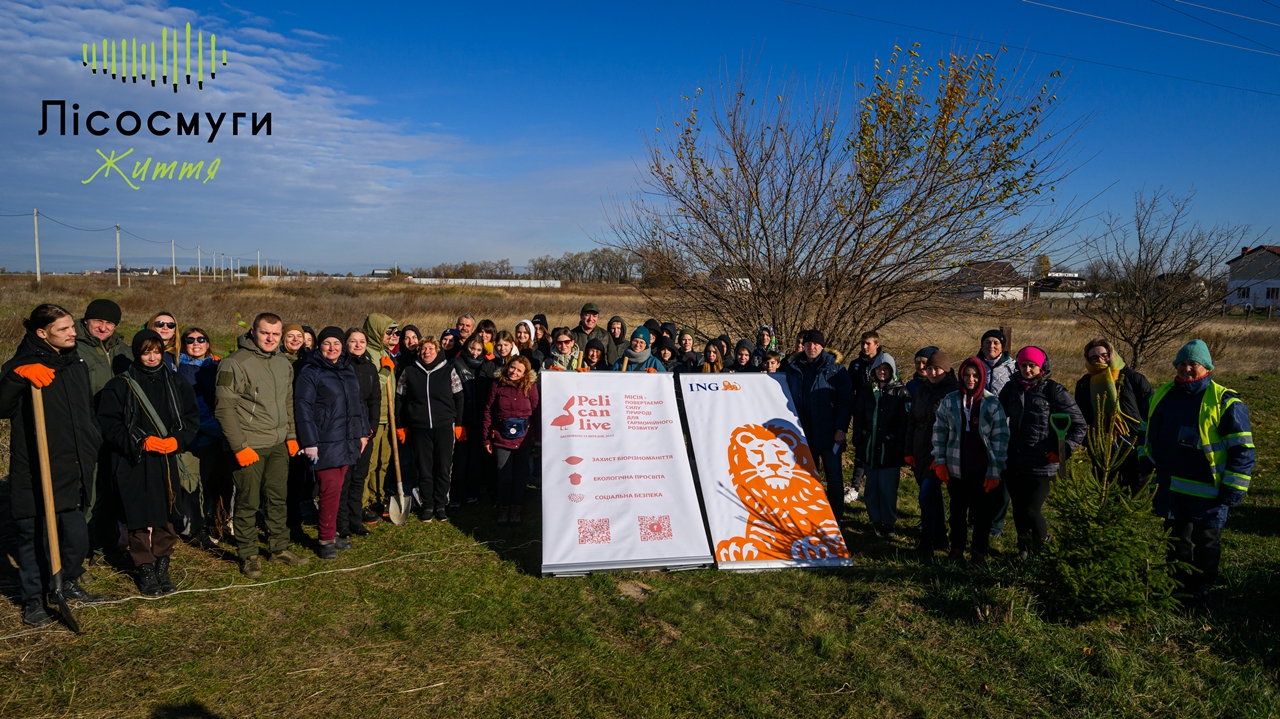
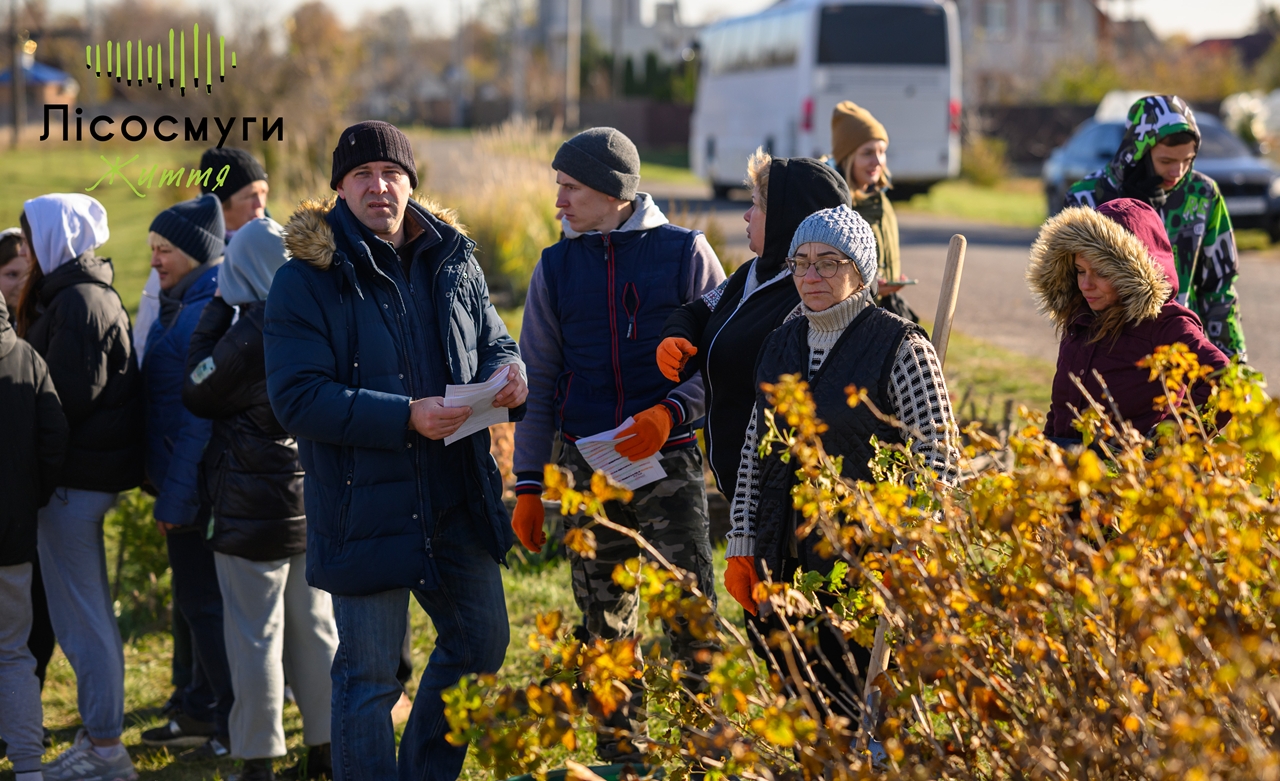
The project team, UAnimals volunteers, local residents, students of Revne Secondary School and Hirsk Lyceum, and their parents and teachers worked together on the site. UAnimals also provided the community with shovels and buckets for the subsequent maintenance of the plantings.
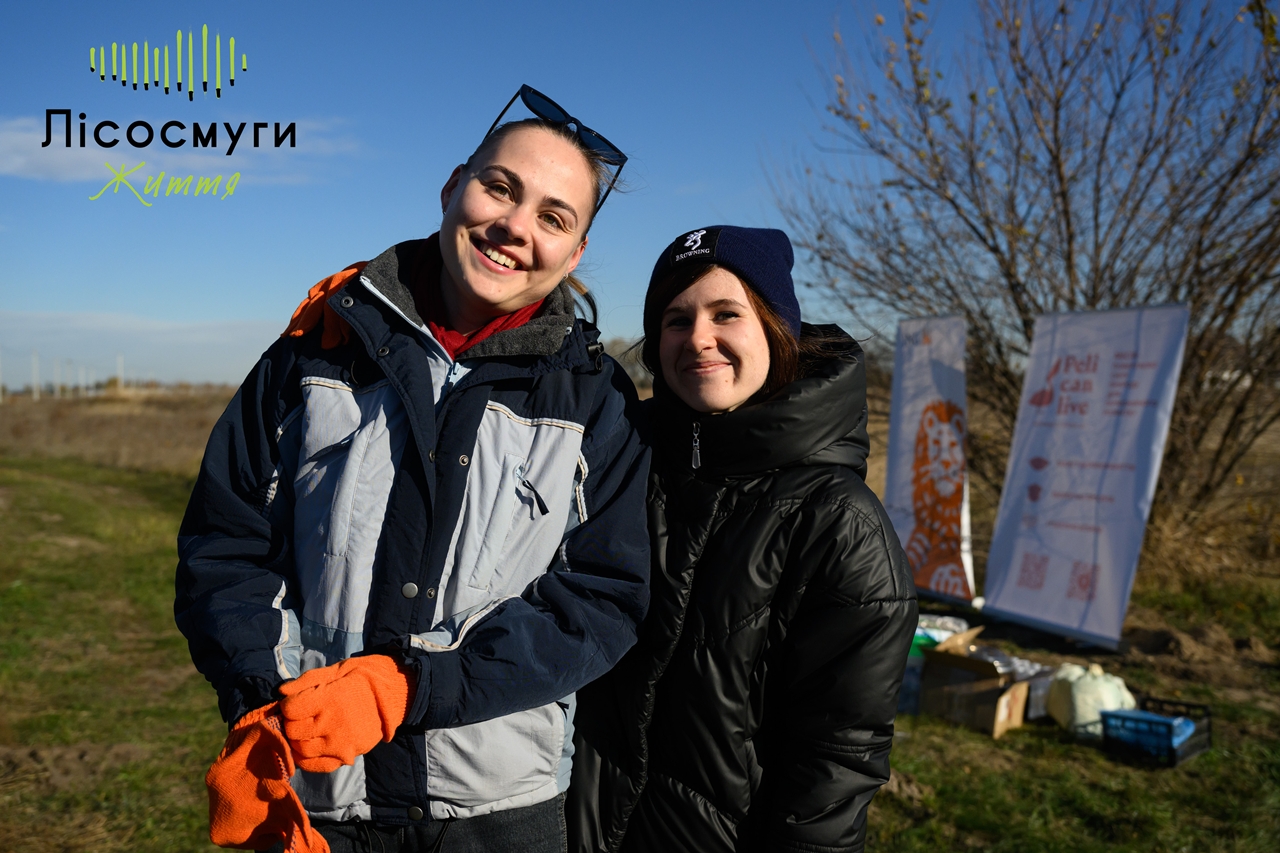
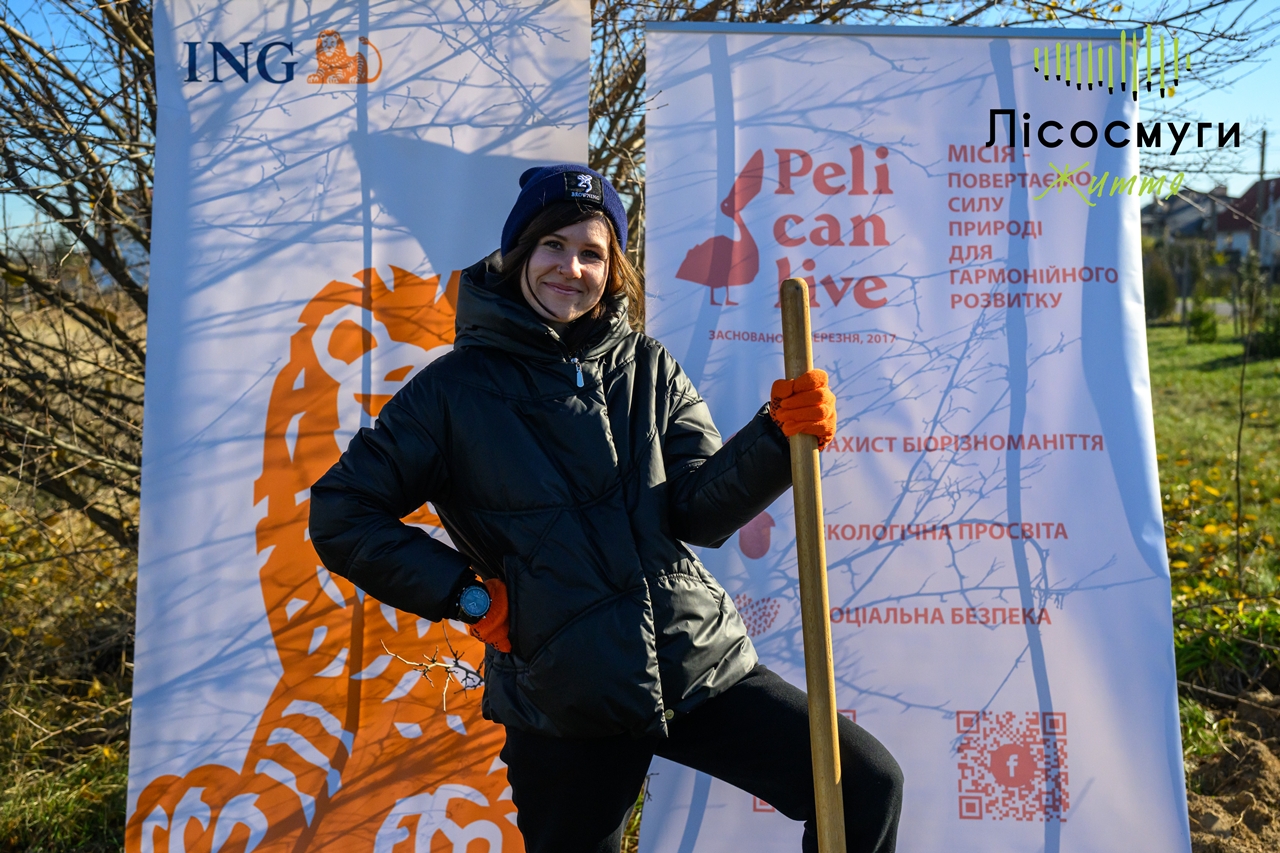
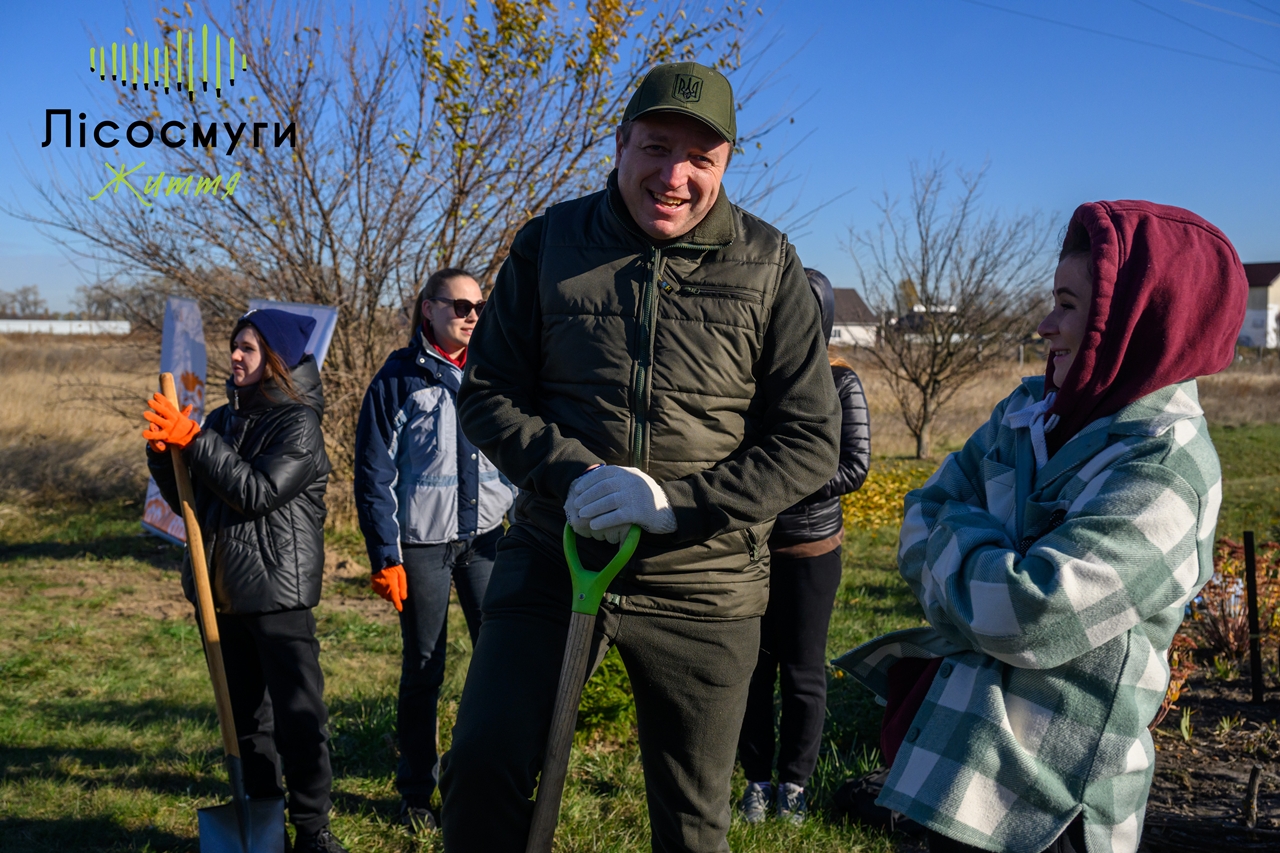
The next stage took place on 12 April 2025. Around 30 people – representatives of ING Bank Ukraine and the Peli can live Charitable Foundation, the Head of the Hirsk community, local residents and volunteers – spent five hours supplementing the first and third rows with 120 plants: barberry, hawthorn, viburnum and cornelian cherry.
On the same day, the “Unbreakable Alley” was established next to the main rows. Sixty ornamental plants were planted there: 20 ginkgo biloba, 20 forsythias and 20 variegated jasmines. The alley became part of the site’s landscaping and added an aesthetic component to the protective function of the shelterbelt. The plants in the alley are recorded separately from the plantings in the three main rows.
In summer 2025, during monitoring, the team found that some of the young lime trees had been accidentally mown down while the site was being maintained. Therefore, in April 2026, the first and third rows were supplemented with an additional 125 trees and shrubs: small-leaved lime, dogwood, spirea, pear, and apple trees.
In total, more than 130 people took part in the various stages of establishing and supplementing the Zatyshna Shelterbelt.
Equipment provided to the community
To prepare the site and carry out the planting, the following equipment was provided to the community:
- KLB-1.7 forest furrow cultivator.
The equipment will be used for mechanical soil cultivation and row maintenance.
Photo Gallery
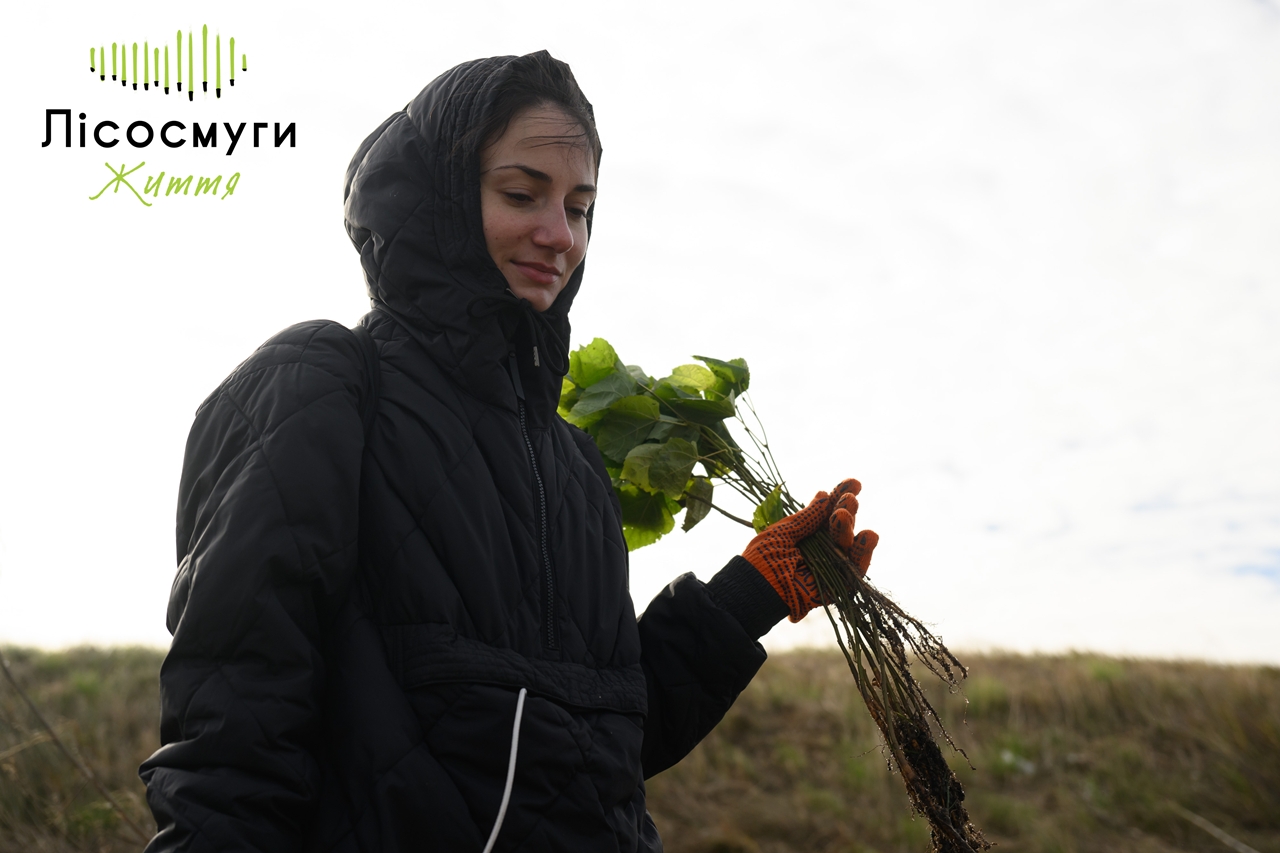
Monitoring and additional planting
- April 2025 – supplementation of the first and third rows of the main shelterbelt and establishment of the “Unbreakable Alley”; 180 plants were planted.
- Summer 2025 – during monitoring, the team found that some of the young lime trees had been accidentally mown down while the site was being maintained. The team decided to supplement the plantings in spring 2026.
- March 2026 – monitoring of the condition of the plantings.
- April 2026 – monitoring and supplementation of the first and third rows; 125 trees and shrubs were planted in two hours.
- June 2026 – scheduled monitoring of the condition of the plantings.
Publications about the event:
- «ЛІСОСМУГИ ЖИТТЯ» — повернення проєкту! (November 11, 2024)
Link to the article - Лісосмуги життя в Гірській громаді! (November 9, 2024)
Link to the article - «Лісосмуги Життя»: як працює проєкт, що допомагає громадам відродити лісосмуги (February 25, 2025)
Link to the article
Zatyshna Shelterbelt on the interactive map
The Shelterbelts of Life project is implemented by the charitable foundation Peli can live in partnership with the National University of Life and Environmental Sciences of Ukraine (NUBiP of Ukraine), with financial support from ING Bank Ukraine.