
A man-made guardian of the Tuzly Lagoons - Site 1
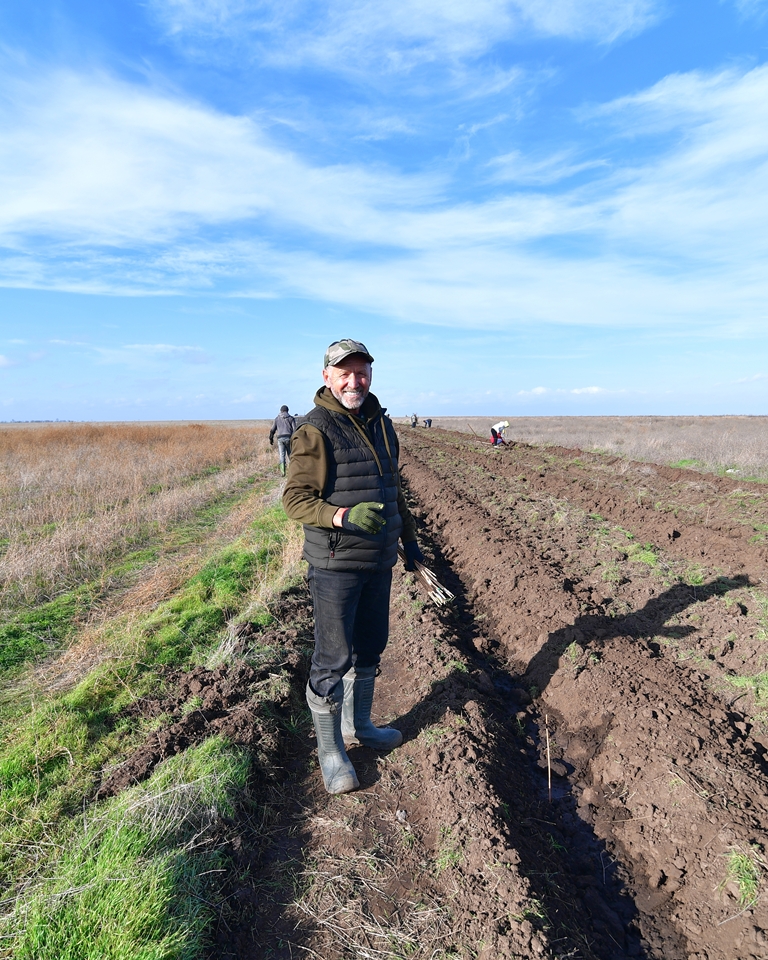
A three-row hedgerow of native trees and shrubs marks the boundary between the territory of the national nature park and agricultural land, protects steppe habitats, and creates a new biodiversity hotspot.
Location: near Shagany Lagoon, close to Prymorske Village, on the boundary between Tuzly Lagoons National Nature Park and agricultural land. The shelterbelt borders three agricultural plots.
Coordinates: 45.67712, 29.86289
Type of work: establishment of a new boundary shelterbelt in the form of a three-row hedgerow
Main planting date: November 25, 2025
Length: 500 m
Number of rows: 3
Number of plants established: 1,250 trees and shrubs
Shelterbelt Composition
The shelterbelt is primarily made up of shrubs that will gradually form a dense hedgerow. Trees of different heights and lifespans complement the planting and strengthen its protective and conservation functions. The species selected for the planting are characteristic of the region’s natural plant communities.
The national park has more than 150 kilometres of land boundary with agricultural landscapes. Some steppe areas and riparian buffer zones are affected by the gradual expansion of ploughing and other forms of agricultural pressure.
The hedgerow marks the boundary between cultivated fields and protected areas. It is intended to help prevent further expansion of ploughed land, reduce wind erosion, and create an additional buffer between agricultural fields and natural habitats. The trees and shrubs will also provide shelter and food for birds, insects, and small mammals.
| Plant species | Number of plants |
|---|---|
| Privet | 382 |
| Red osier dogwood | 300 |
| Dog rose | 145 |
| European spindle | 137 |
| Black elderberry | 87 |
| European smoketree | 74 |
| Field maple | 50 |
| English oak | 35 |
| Field elm | 25 |
| European ash | 15 |
| Total | 1,250 |
How the Shelterbelt Was Established
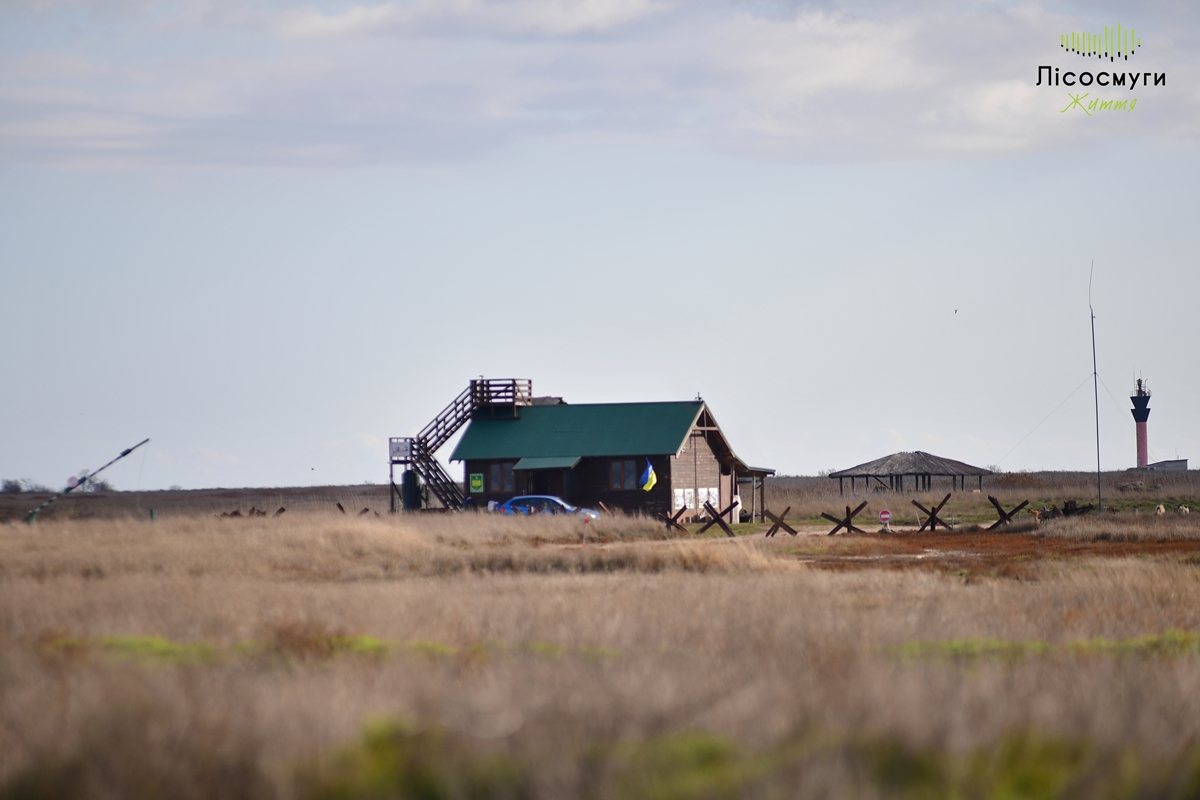
The cooperation between Tuzly Lagoons National Nature Park and the charitable foundation Peli can live began in 2018 with a project to create artificial islands for Dalmatian pelicans. Together with volunteers, the partners built an artificial island and a birdwatching shelter. The foundation also helped equip a visitor centre, observation towers, a small solar power plant, a weather station, and a video surveillance system.
In 2019, the foundation and the park continued their cooperation through the “Trees for Birds” project. Together with local schoolchildren, they planted trees and shrubs within the park. Unfortunately, some of these plantings were later destroyed by agricultural machinery.
Another joint initiative was the rescue of the pink pelicans Alkalya and Alibey. The birds had been kept at a restaurant with their wings clipped before being transferred to the park. Staff of the national park helped the pelicans relearn how to feed themselves on fish and fly, while the foundation supported their treatment and rehabilitation before their return to the wild. In autumn 2022, the pelicans migrated south together with a wild flock.
In 2025, the partnership continued within the Shelterbelts of Life project. In late November, a vulnerable site near Shagany Lagoon was selected for the first hedgerow. The site borders three agricultural plots.
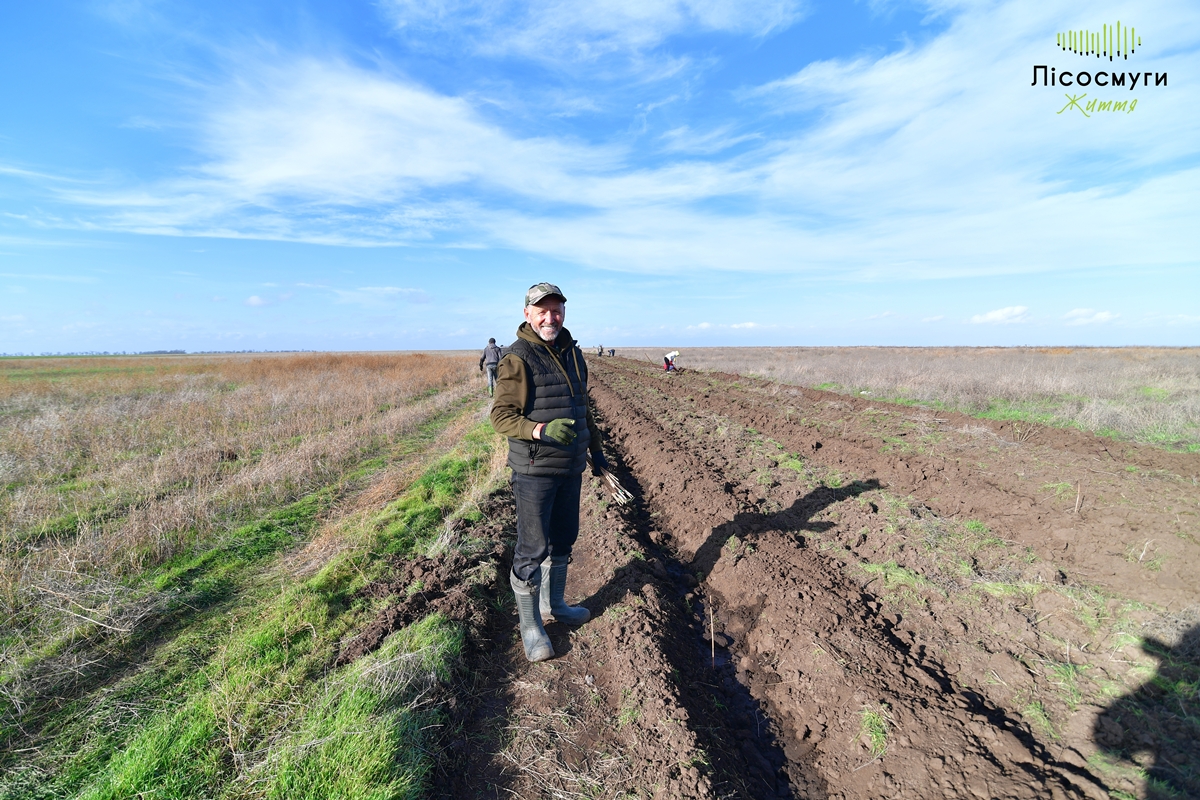
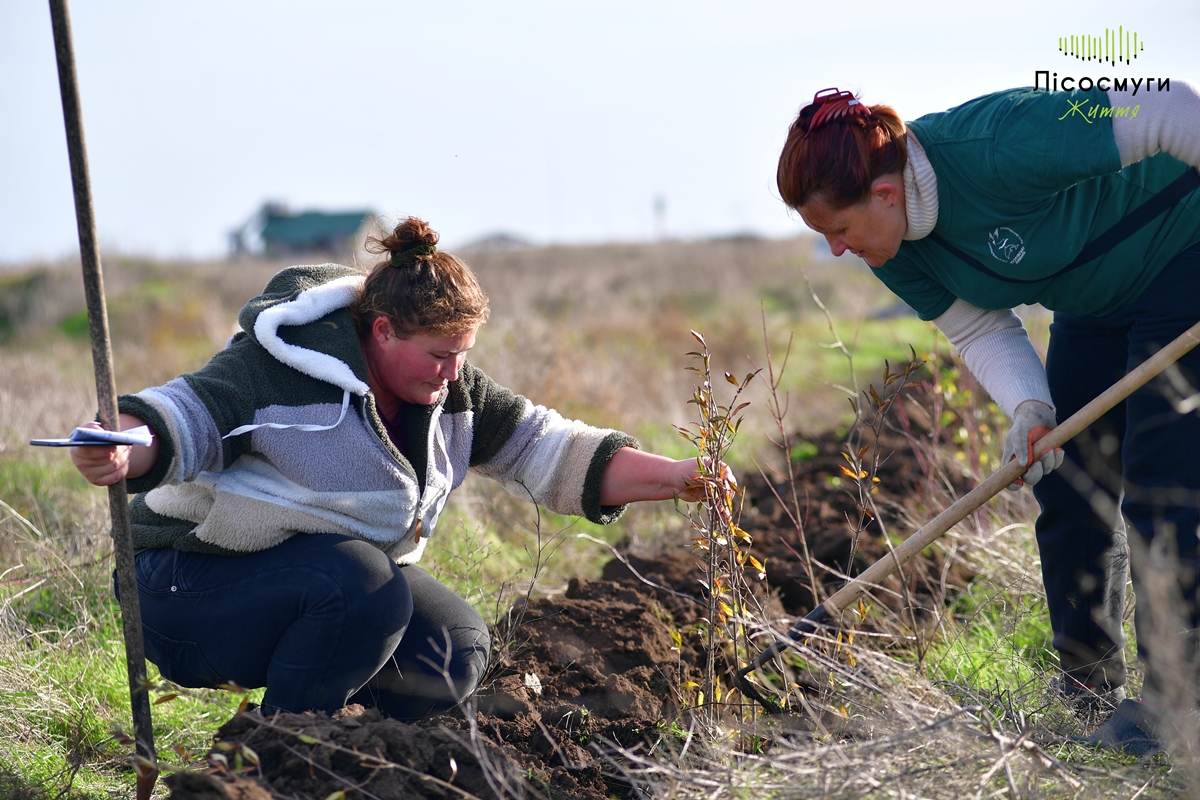
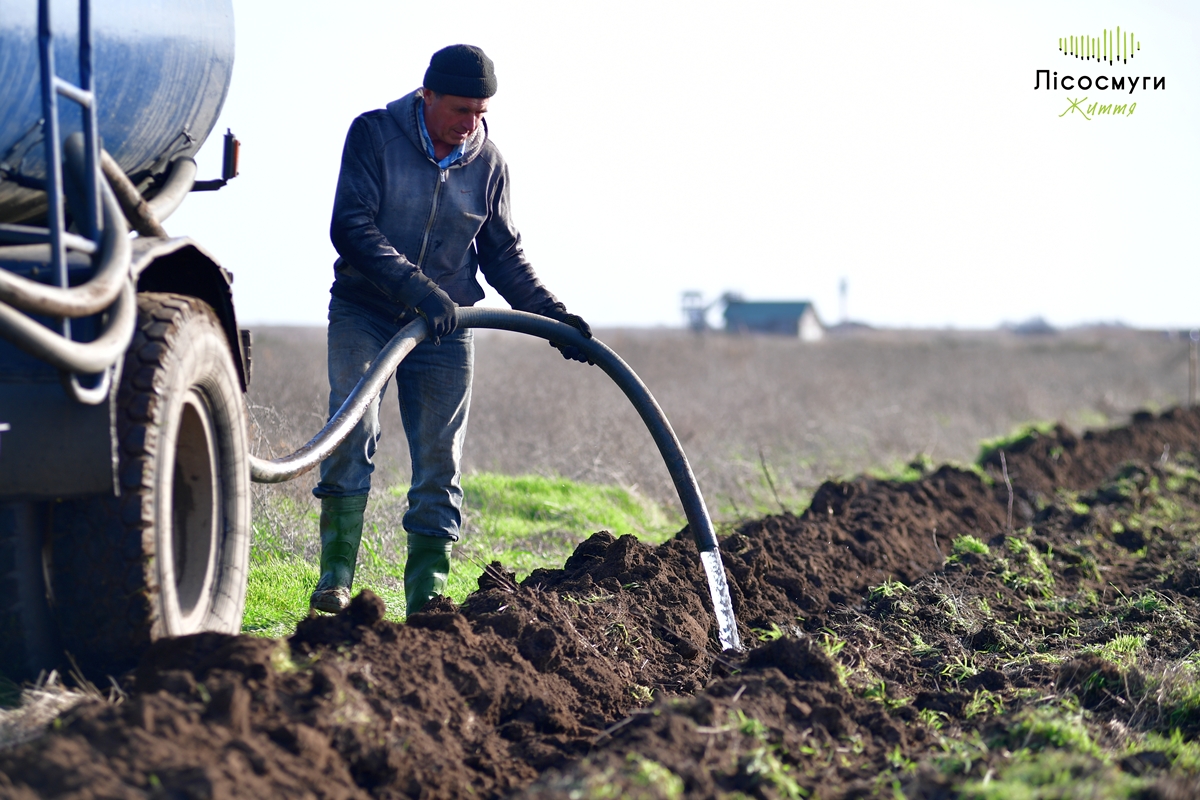
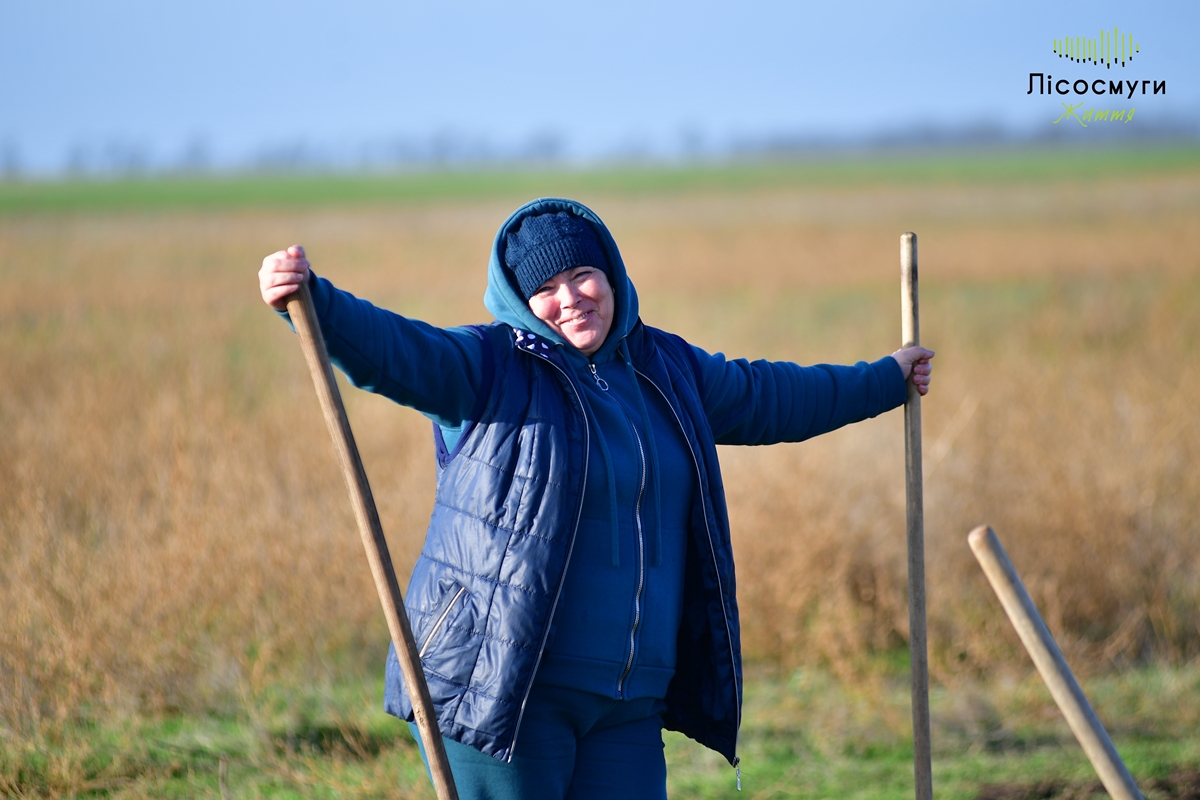
Park staff prepared the area and, together with volunteers and project partners, planted 1,250 trees and shrubs. The three-row hedgerow is 500 metres long.
The species composition and planting scheme were developed with the involvement of Oleksandr Sovakov and Nataliia Pashkevych, scientific advisers to the Shelterbelts of Life project, together with Olena Bronskova and Olena Popova, specialists from Tuzly Lagoons National Nature Park.
For site preparation, planting, and subsequent maintenance, the park received:
- Kentavr MB 1012D-8 walk-behind tractor with a set of attachments
- MB-60 BD wood chipper
- Husqvarna earth auger
- electric fencing system equipment
Photo Gallery
Monitoring and Supplementary Planting
Park botanists monitor the survival and condition of the trees and shrubs, maintain the soil, and protect the site from damage. During monitoring visits, they also assess how native species cope with drought, strong winds, and insufficient rainfall.
The monitoring results will be used to develop recommendations for communities and farmers in southern Ukraine.
Publications About the Event
«Лісосмуги життя» біля НПП «Тузлівські лимани»: жива межа, що захищає степ і землю
(December 1, 2025)
Link to the article
Shelterbelt on the Interactive Map
The Shelterbelts of Life project is implemented by the charitable foundation Peli can live in partnership with the National University of Life and Environmental Sciences of Ukraine (NUBiP of Ukraine), with financial support from ING Bank Ukraine.