
Shelterbelt near Muzychi Village
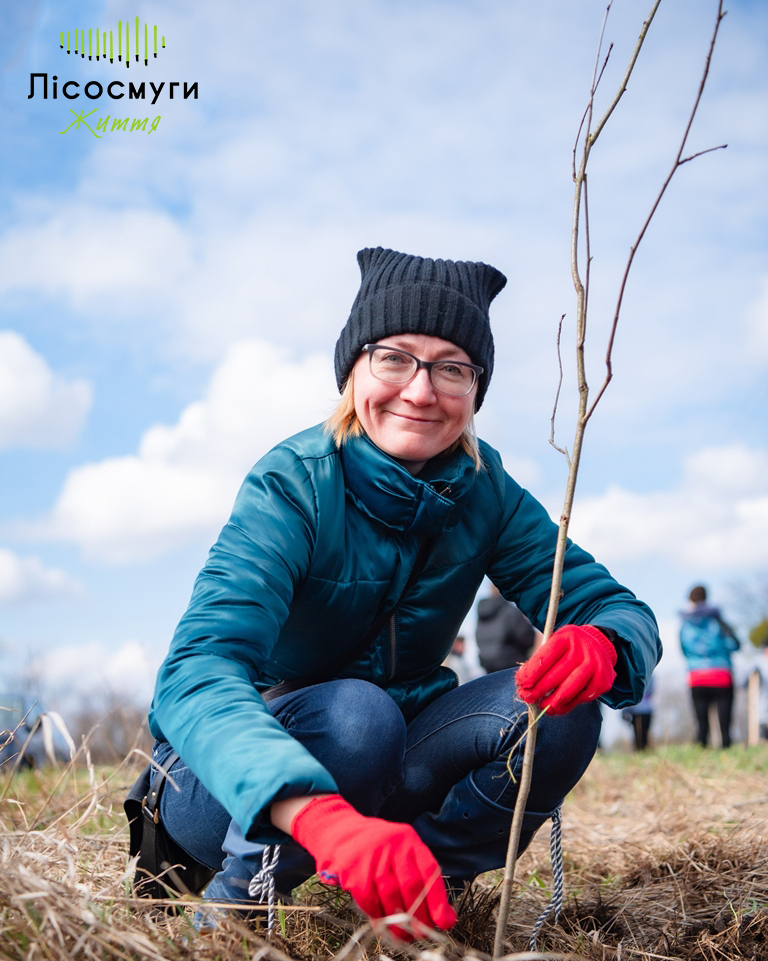
The shelterbelt consists of two sections on opposite sides of the road connecting the village with the R-04 highway, also known as the Byshiv Highway.
Location: Muzychi Village, Bilohorodka Rural TC, Kyiv Oblast
Coordinates: 50.3772, 30.10902
Type of work: establishment of a new shelterbelt
Main work date: March 26, 2025
Total length: 1,220 m
Sections: 660 m and 560 m
Area: 0.88 ha
Width: 6 m
Number of rows: 2
Number of plants planted: during the main planting – 810 trees and shrubs and 2,440 oak acorns; during gap-filling – 270 plants
Shelterbelt Composition
The row closest to the road consists of lime, maple, pear, and apple trees, while the second row, on the field side, is formed by oaks. Shrubs complement the planting in sections where there is sufficient width and will provide birds with food and shelter.
| Plant species | Main planting 26.03.2025 |
Gap-filling 16.04.2026 |
|---|---|---|
| English oak | 2,440 acorns | 200 |
| Small-leaved (heart-leaved) lime | 450 | 30 |
| Norway maple | 150 | – |
| European crab apple | 75 | 20 |
| Common pear | 75 | 20 |
| European cranberrybush | 10 | – |
| Dog rose | 10 | – |
| Common barberry | 10 | – |
| Lilac | 30 | – |
| Total | 810 plants and 2,440 acorns | 270 plants |
How the Shelterbelt Was Established
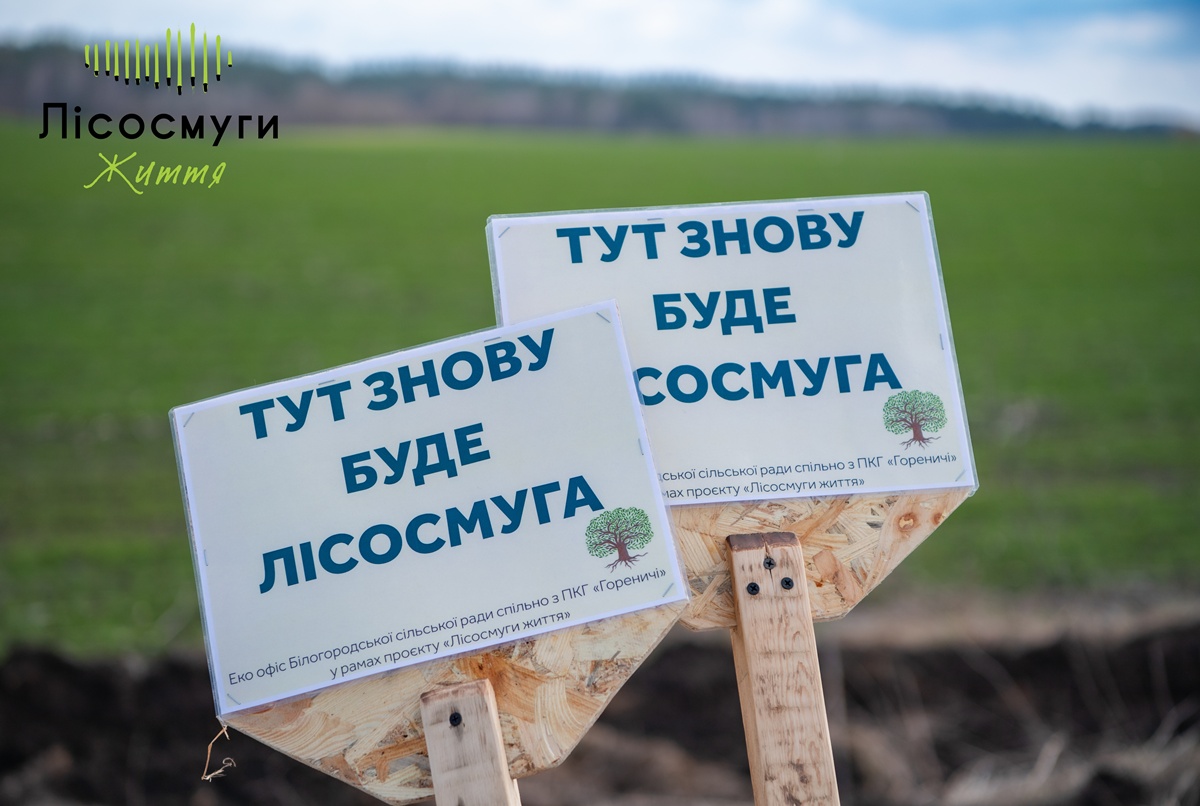
In spring 2025, a new shelterbelt was established near Muzychi Village – the first one created in the Bilohorodka community in more than 50 years. Its establishment was the result of a local initiative and cooperation among community members, researchers, civil society organizations, forestry professionals, and volunteers.
The initiative was launched by Olha Leonova, Head of the Ecology and Natural Resources Department of the Bilohorodka Rural Council. She oversees the condition of green spaces in the community and coordinated the site preparation and cooperation with project partners. Tetiana Nemyrovych, Head of the NGO “Let’s Change the Village Together,” established communication with local residents and helped recruit volunteers.
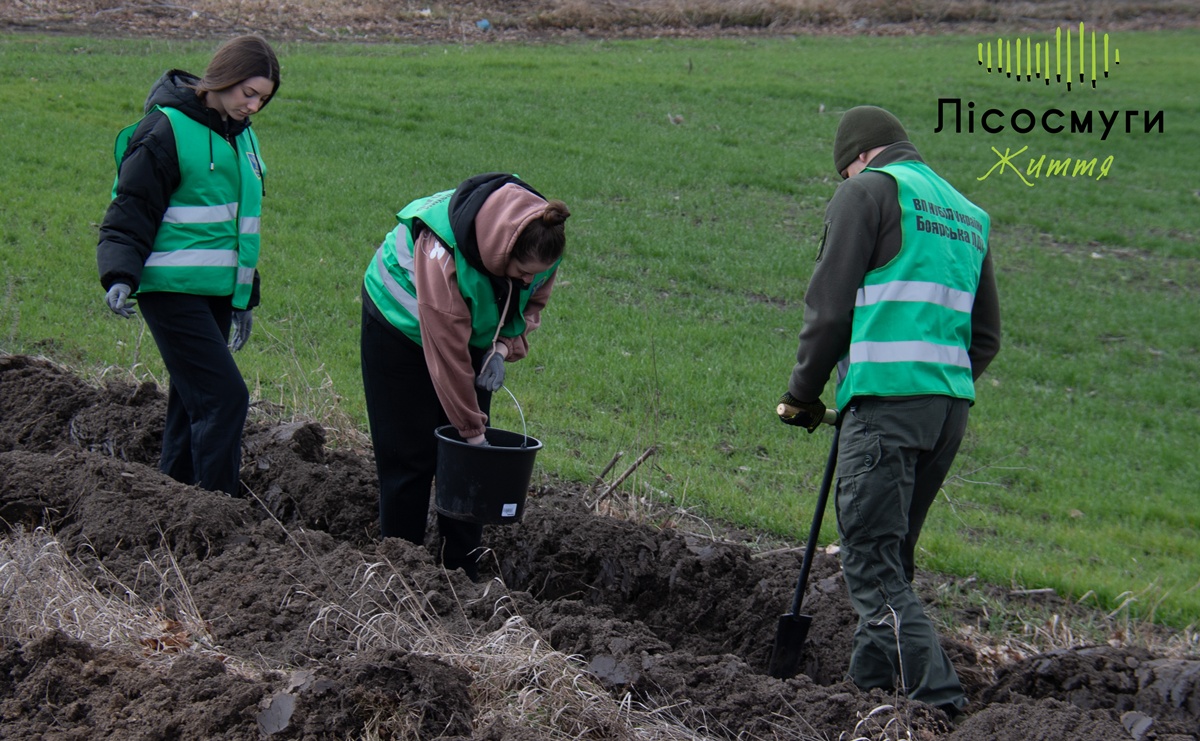
Preparing the site required a substantial amount of work. The municipal enterprises PKH “Horenychi” and KKP “Bilohorodka” cleared the site, removed some unwanted vegetation, mowed the roadside, and mechanically cultivated the soil. Using machinery from the Boyarka Forest Research Station, they prepared furrows for the future rows.
The Boyarka Forest Research Station also provided planting material and practical assistance. Professional support during the planting was provided by specialists from the Teteriv Forestry Unit.
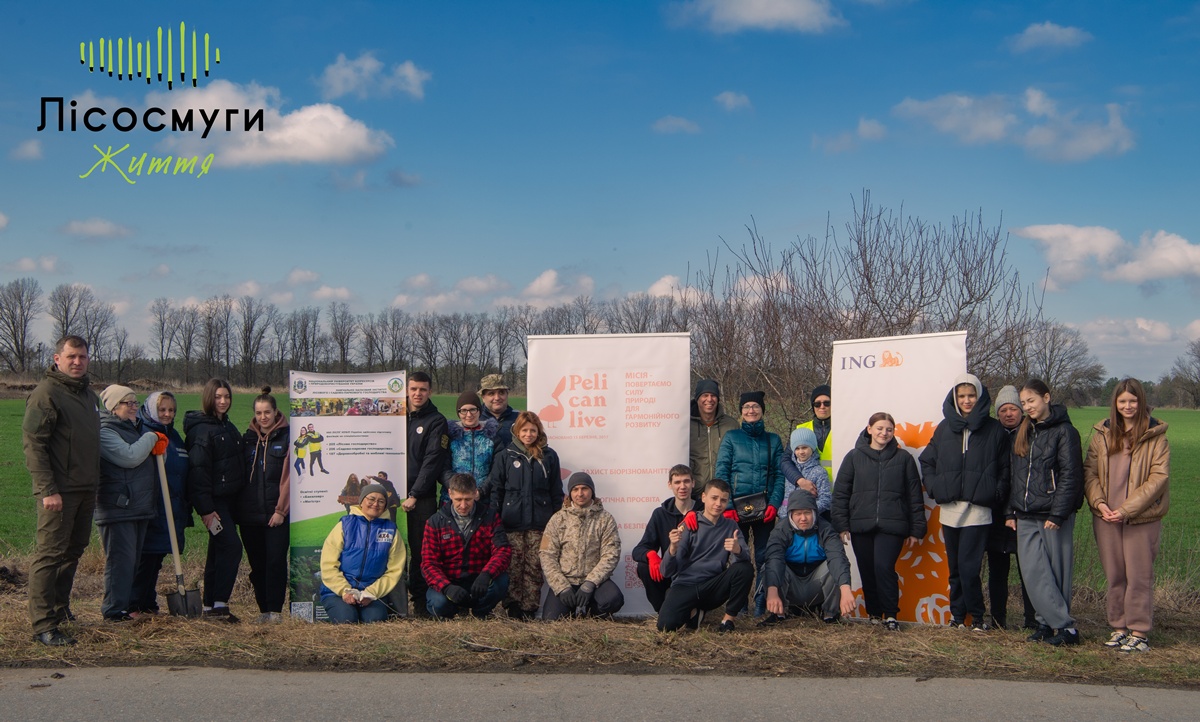
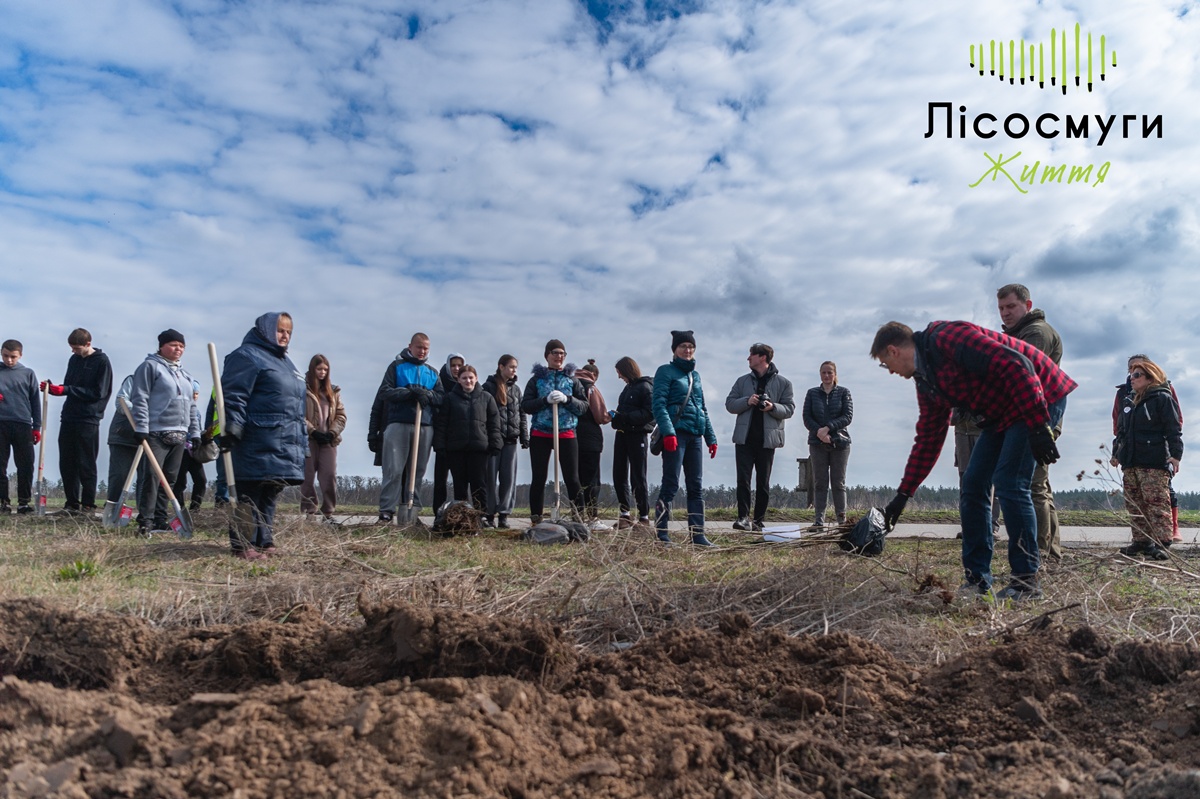
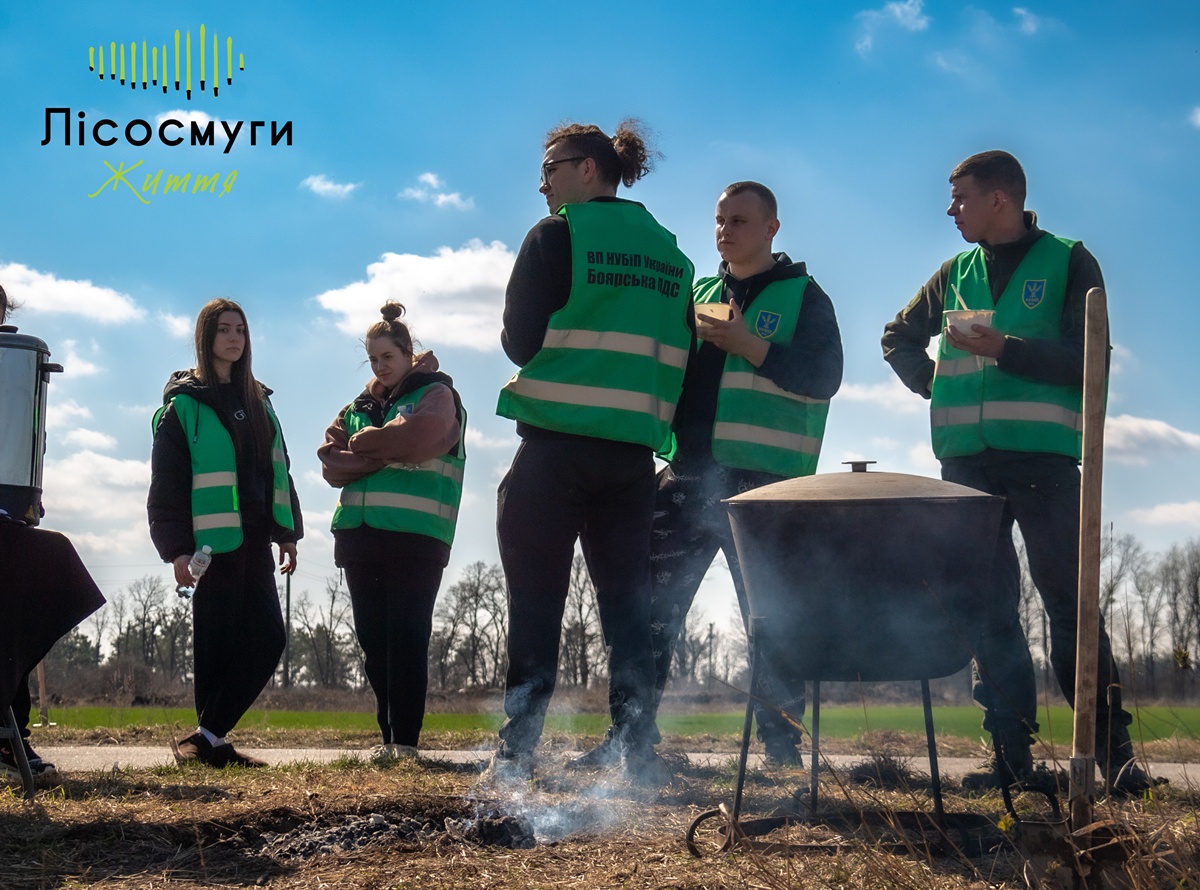
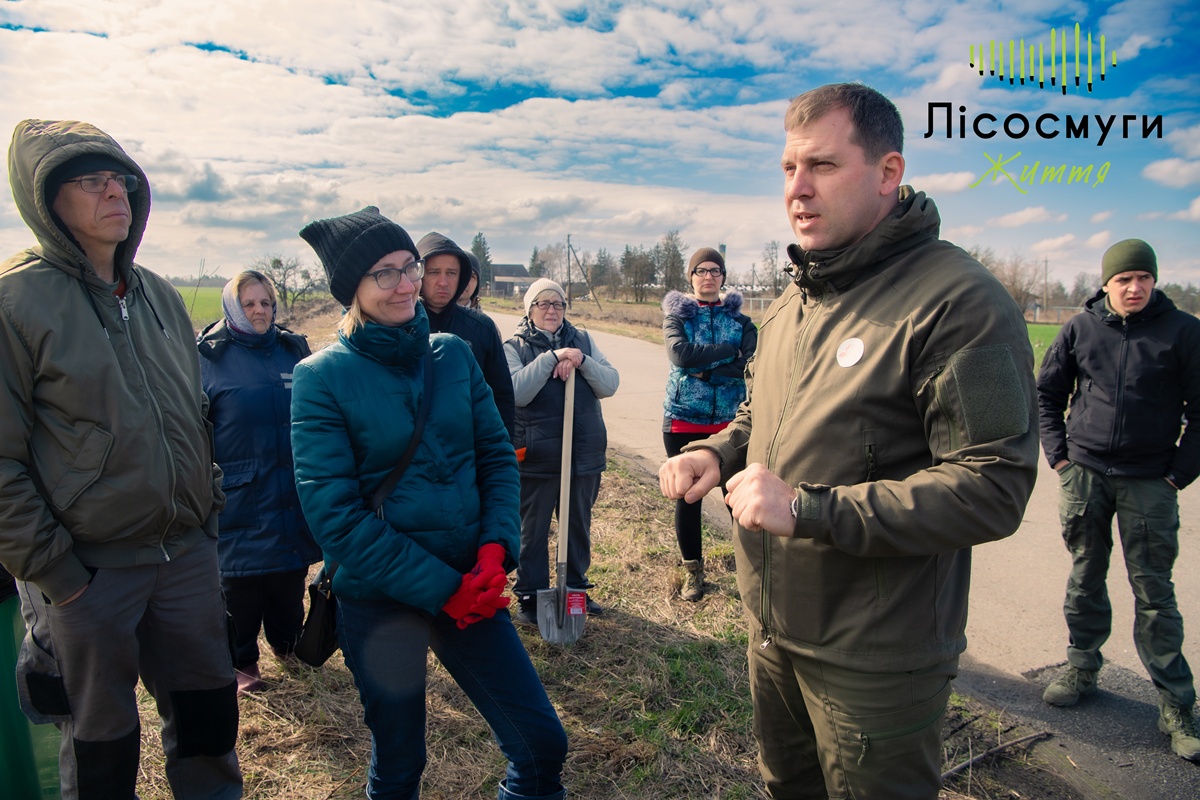
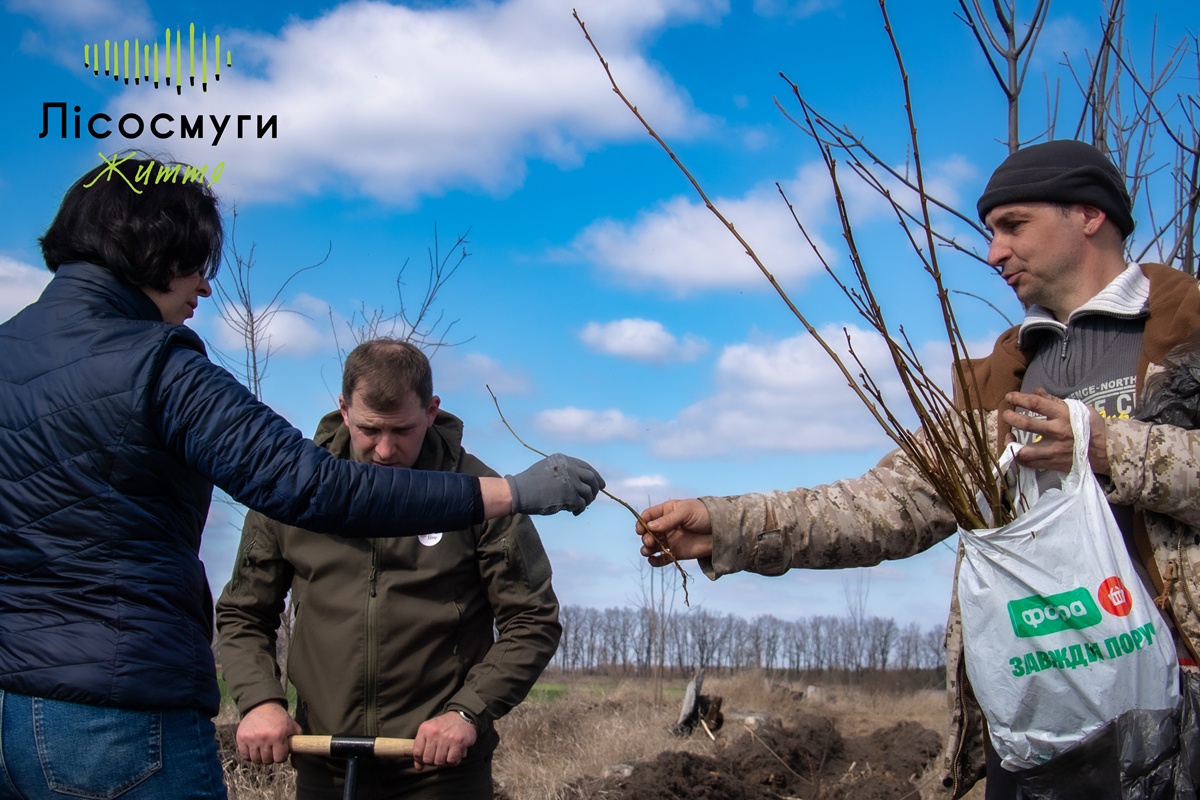
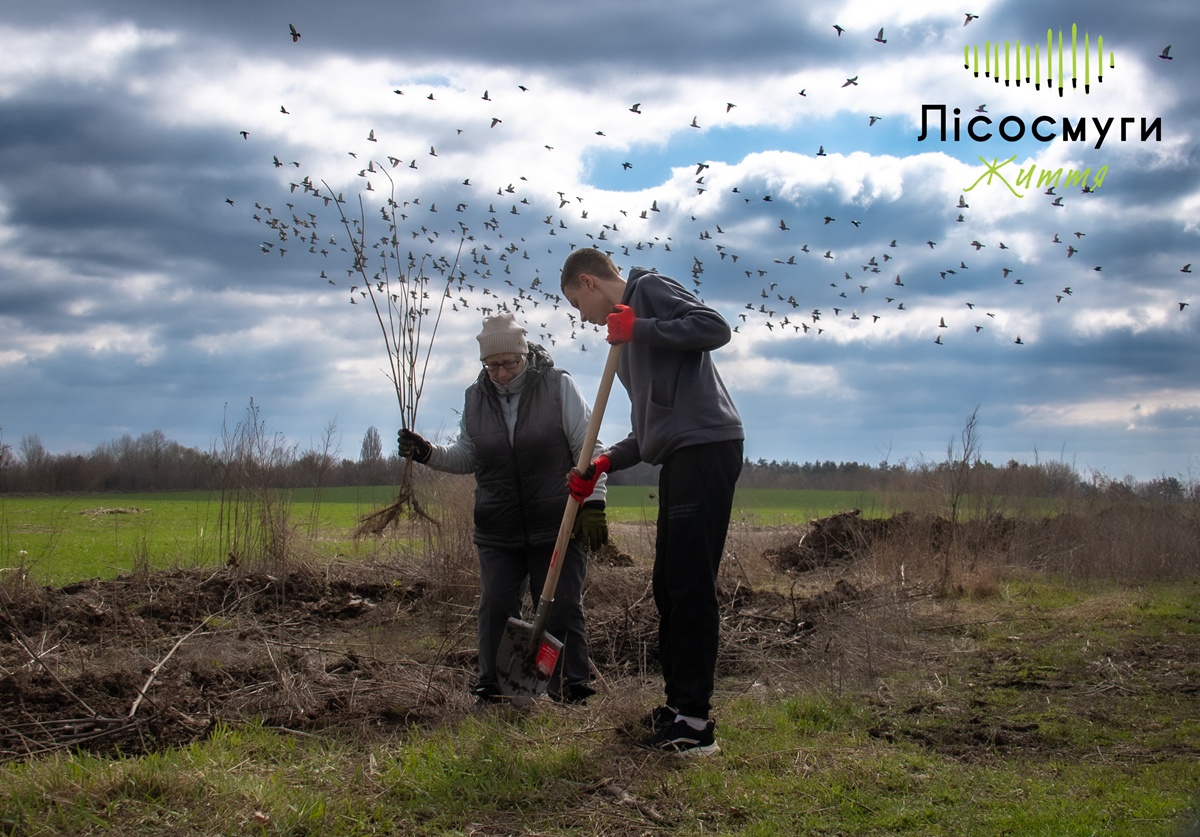
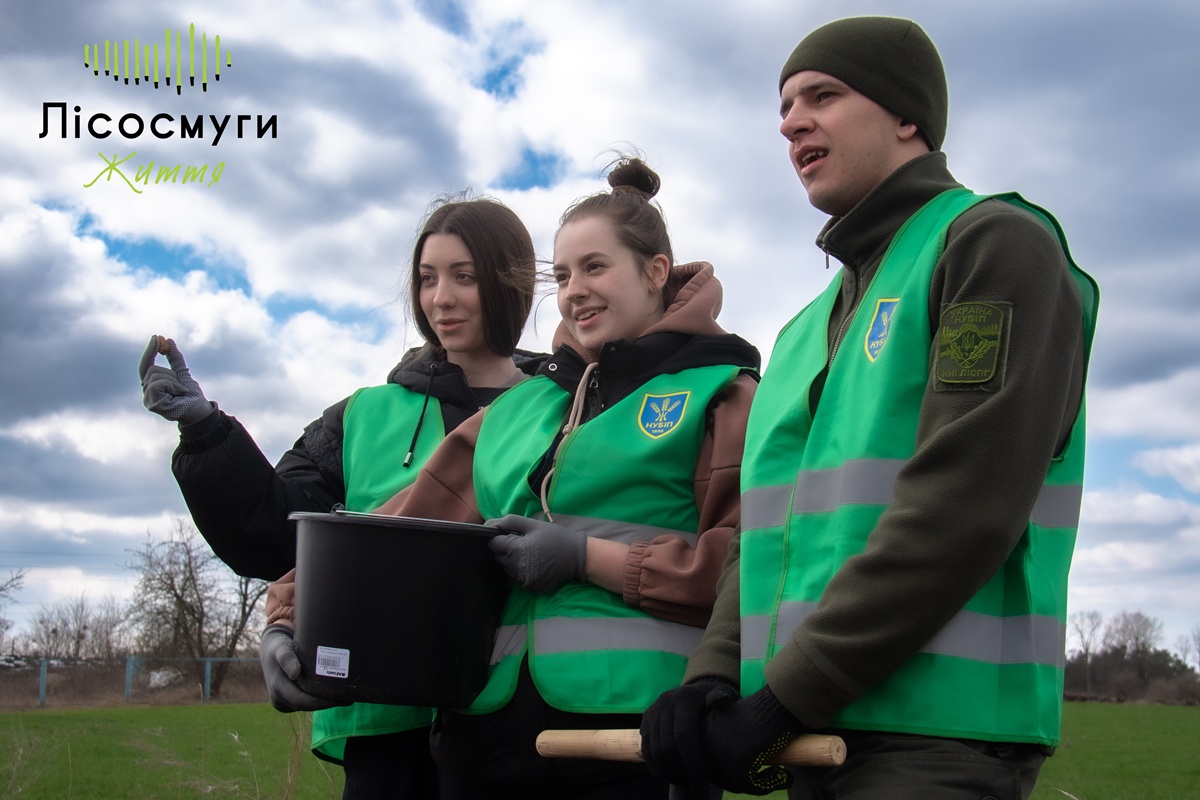
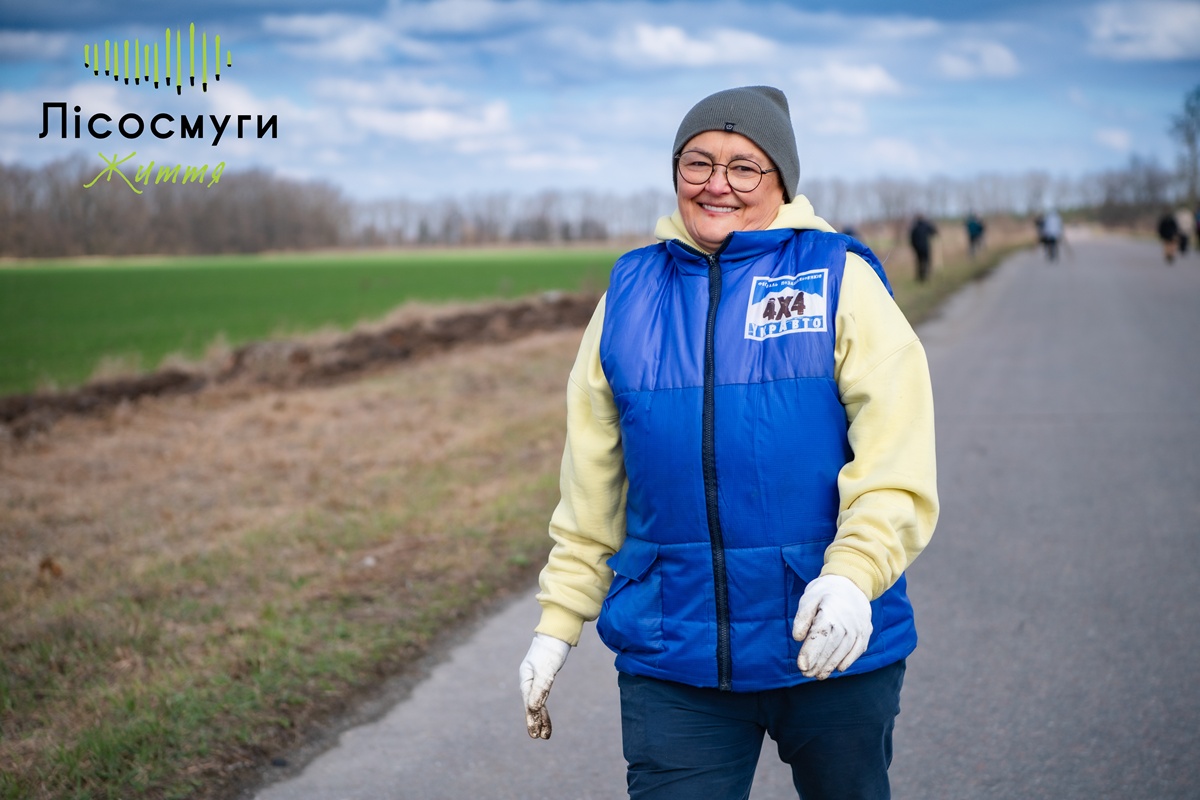
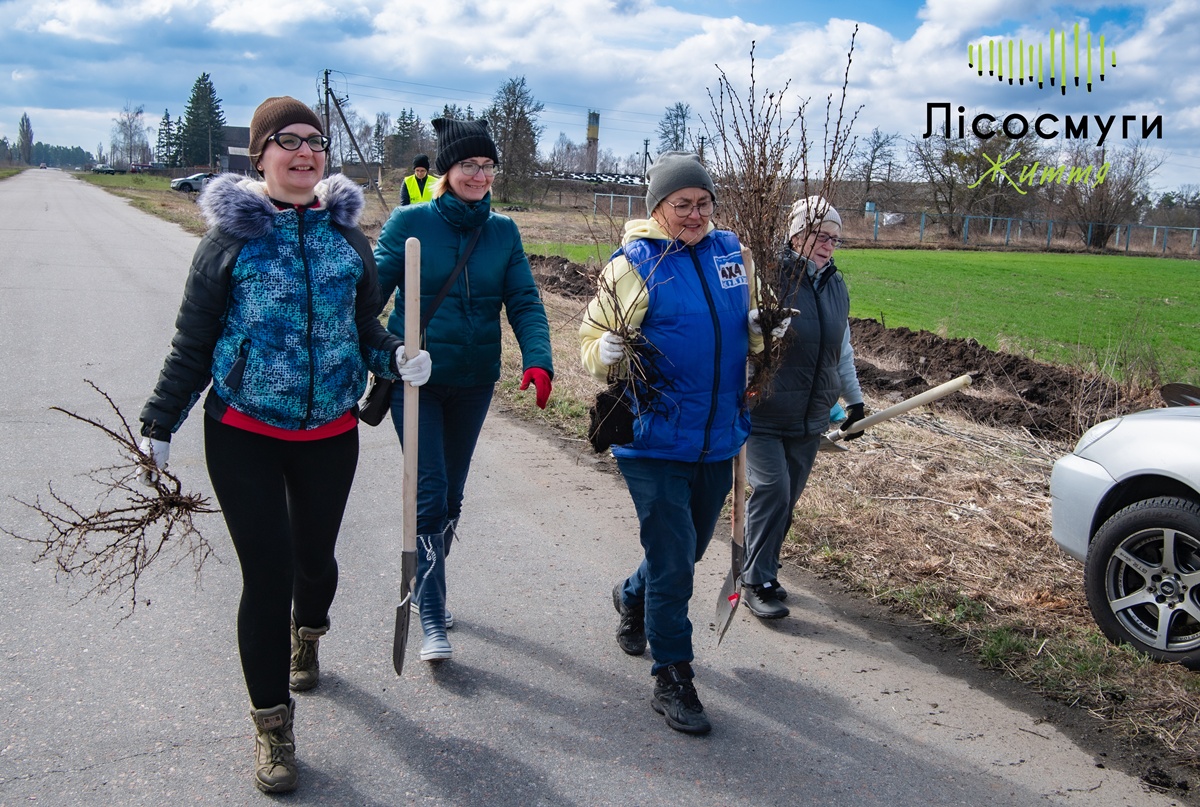
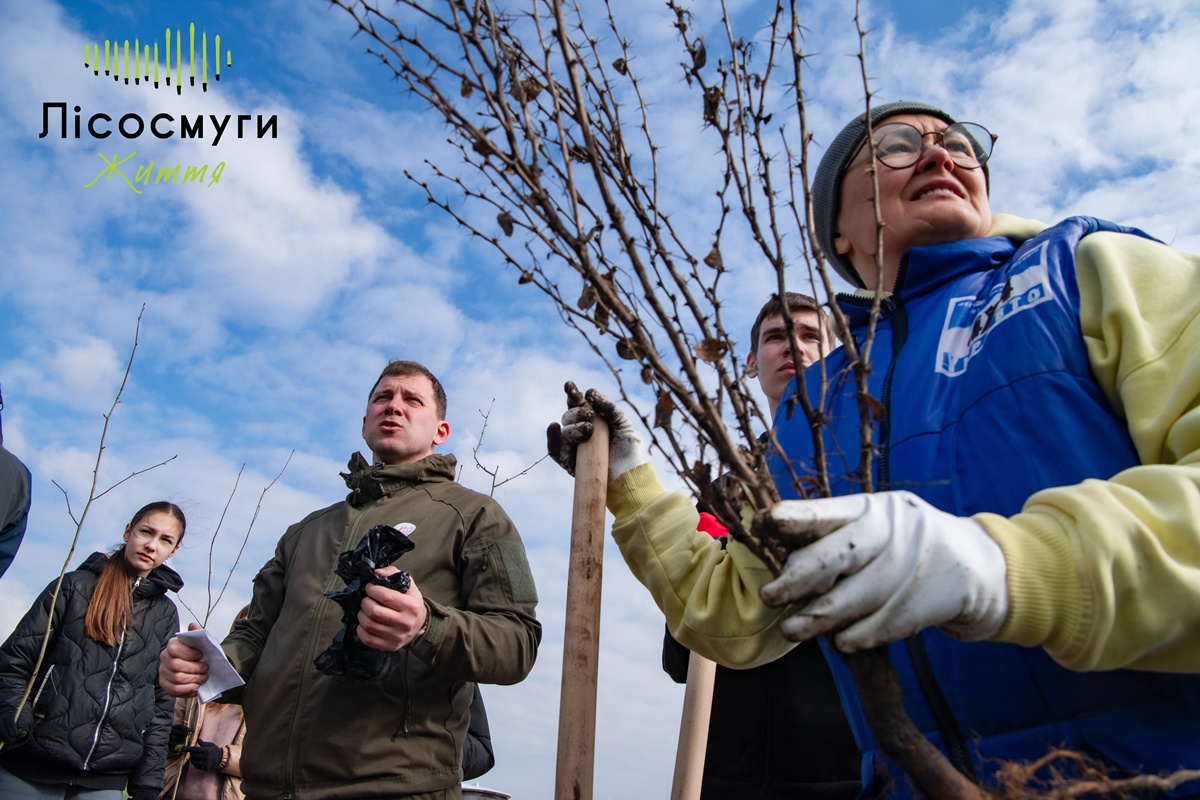
The main stage of the shelterbelt establishment took place on March 26, 2025. In a single day, participants planted 810 trees and shrubs and sowed 2,440 oak acorns. The work brought together residents of Muzychi Village, students of Muzychi Lyceum, students and faculty of NUBiP of Ukraine, representatives of the Bilohorodka community, staff of the Boyarka Forest Research Station, and specialists from the Teteriv Forestry Unit.
After the planting, Olha Leonova and Tetiana Nemyrovych have continued to monitor the condition of the shelterbelt and carry out the necessary maintenance. Olha also shares updates on the shelterbelt’s development and the work carried out on her social media page.
For site preparation and planting, the following equipment was provided to the community:
- KLБ-1.7 forest furrow cultivator
The equipment is intended for mechanical soil cultivation and maintenance of the planting rows.
Photo Gallery
Monitoring and Gap-Filling
To support the shelterbelt’s ongoing maintenance, the project provided the Bilohorodka community with a forest furrow cultivator. It is used for mechanical soil cultivation and maintenance of the planting rows.
Shelterbelt Monitoring Dates
- April 16, 2026 – monitoring was carried out and gaps in the planting were filled. A total of 270 plants were planted: 200 oaks, 30 small-leaved limes, 20 pears, and 20 apple trees. The seedlings were marked for subsequent monitoring and maintenance. Two community representatives and eight researchers took part in the work.
- June 5, 2026 – the first stage of summer maintenance was carried out, including mowing the rows and inter-row spaces, weeding, and marking the seedlings. The work involved 15 students, two NUBiP of Ukraine faculty members, and two community representatives, including Olha Leonova.
- June 11, 2026 – the second stage of maintenance was carried out with the participation of 17 students, two faculty members, and two community representatives. Following the two stages, 70% of the total planned maintenance work had been completed.
Further maintenance includes regular mowing, cultivating the soil around the plants, monitoring tree survival, and filling gaps where plants have failed to establish. The shelterbelt is jointly maintained by the Bilohorodka community, NUBiP of Ukraine, the Boyarka Forest Research Station, and the project team.
Publications about the event:
- Лісосмуги життя у Білогородській громаді (February 25, 2025)
Link to the article
Shelterbelt on the Interactive Map
The Shelterbelts of Life project is implemented by the charitable foundation Peli can live in partnership with the National University of Life and Environmental Sciences of Ukraine (NUBiP of Ukraine), with financial support from ING Bank Ukraine.