
Yahotyn Shelterbelt
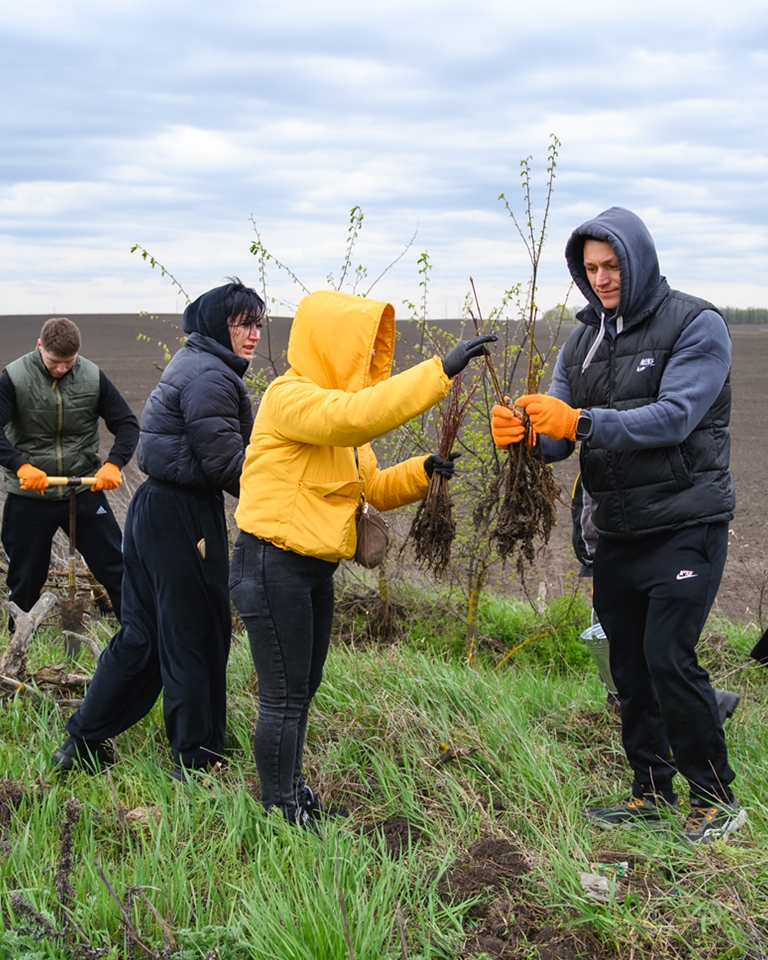
The first shelterbelt that the Shelterbelts of Life project team restored in Yahotyn TC. The existing planting needed to be supplemented, so new trees and shrubs were planted on the site and litter was removed.
Location: Yahotyn, Yahotyn Urban TC, Kyiv Oblast, Ukraine
Coordinates: 50.28572, 31.70193
Type of work: restoration of an existing shelterbelt
Main restoration date: April 23, 2026
Length: 750 m
Area: 0.32 ha
Number of rows: 1/2
Configuration: multi-section shelterbelt
Number of plants established: 581 trees and shrubs
Shelterbelt Composition
Five species of trees and shrubs were planted as part of the restoration. English oak accounted for the largest share of the new planting.
| Plant species | Number of plants |
|---|---|
| English oak | 251 |
| Linden | 100 |
| Cherry plum | 100 |
| Norway maple | 80 |
| European cranberrybush (viburnum) | 50 |
| Total | 581 |
The new seedlings were planted to supplement the existing trees in degraded sections of the shelterbelt. The combination of oak, linden, cherry plum, Norway maple, and viburnum will help restore the density of the planting, protect the soil, and provide additional habitat for birds, insects, and other wildlife.
How the Shelterbelt Was Restored
The collaboration with Yahotyn TC began with an introduction to Yevhen Dovhaliuk, head of the Supii Lake Explore Center. The center studies local biodiversity, promotes citizen science, birdwatching, environmental education, and volunteering, and is part of the EcoStation Network of Ukraine.
Over several weeks, Yevhen and the project team surveyed potential locations. A partially degraded shelterbelt was selected for restoration, and a work plan was subsequently developed. Yevhen coordinated site preparation, communication within the community, and participant engagement.
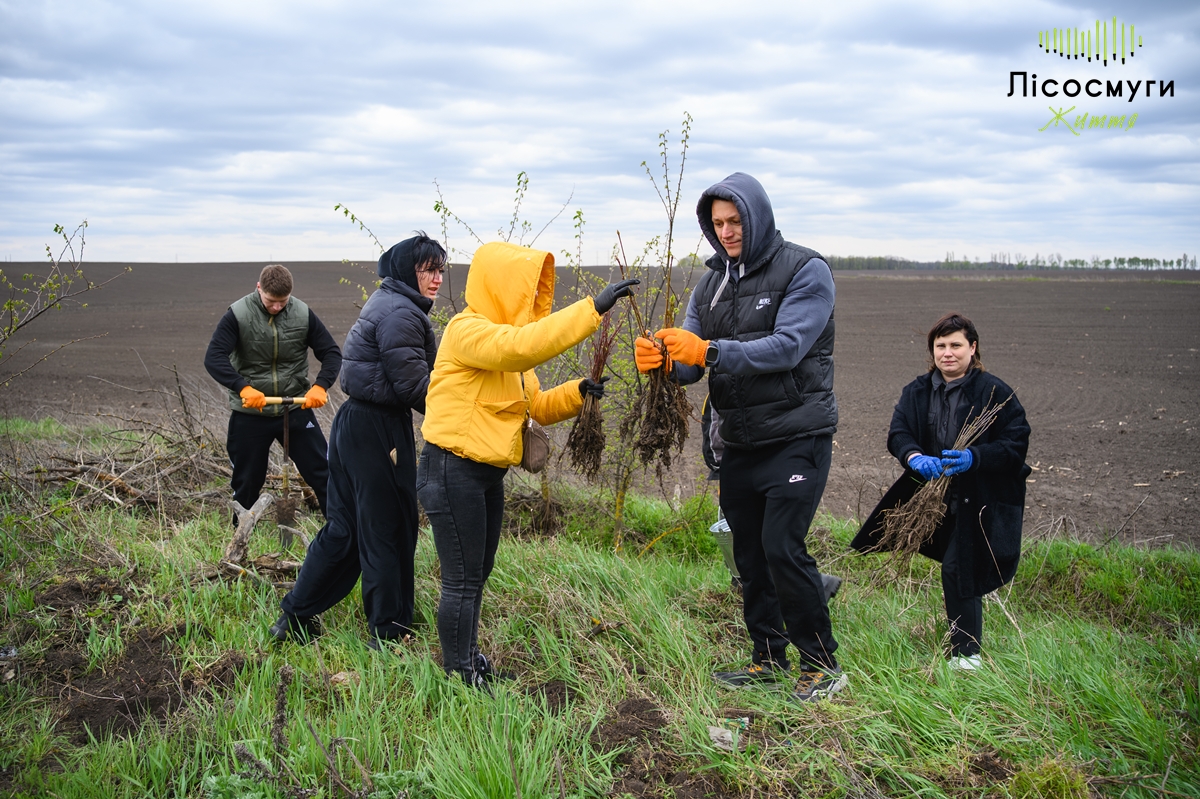
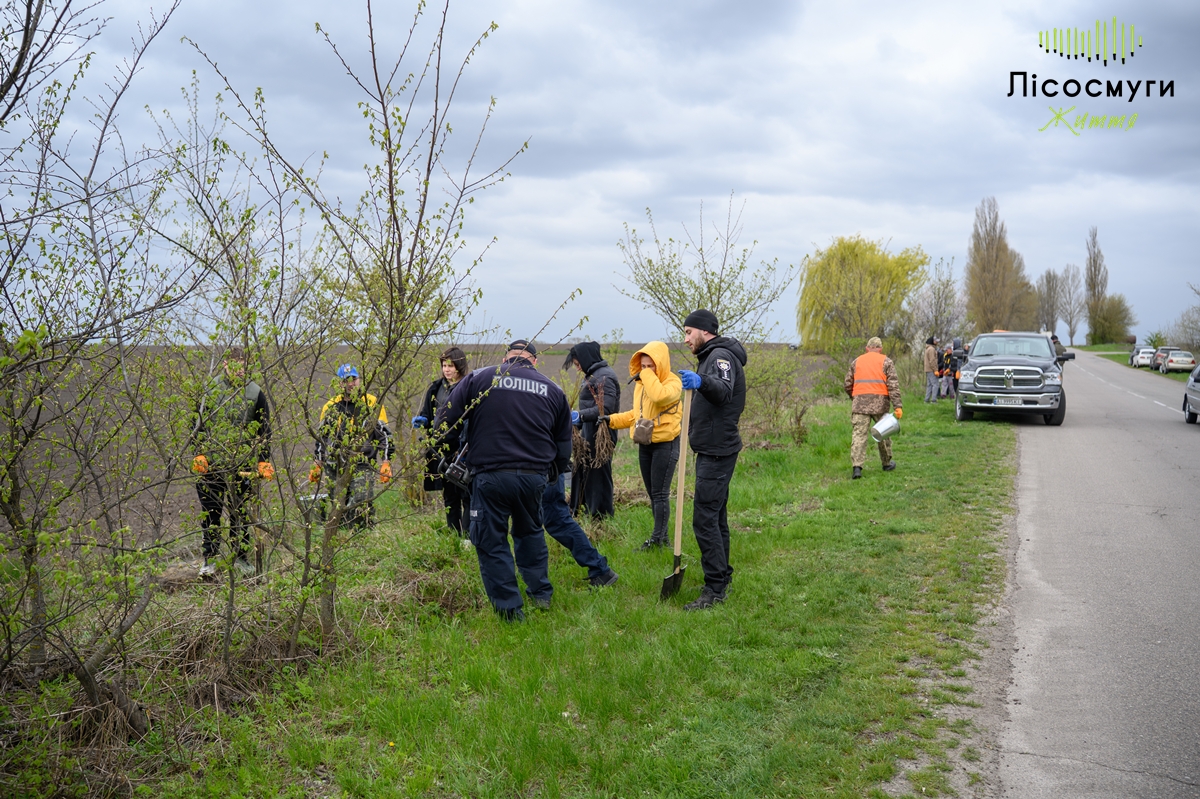
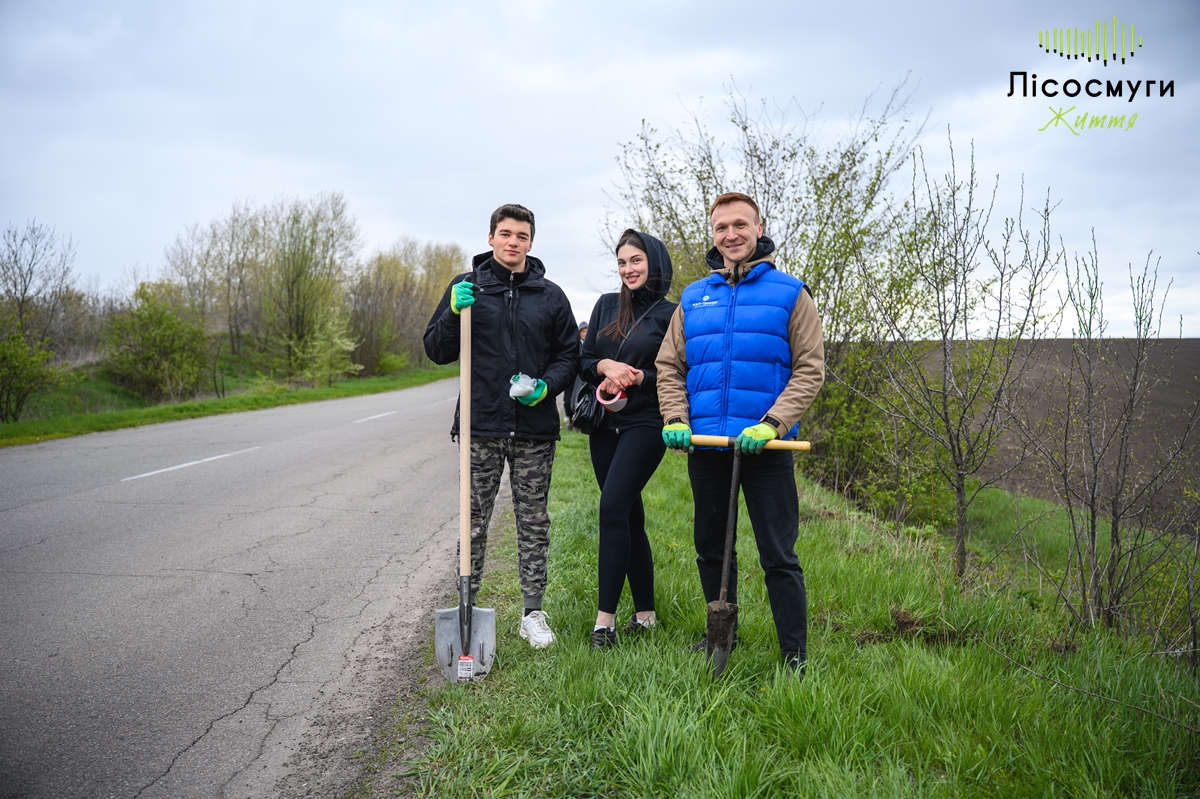
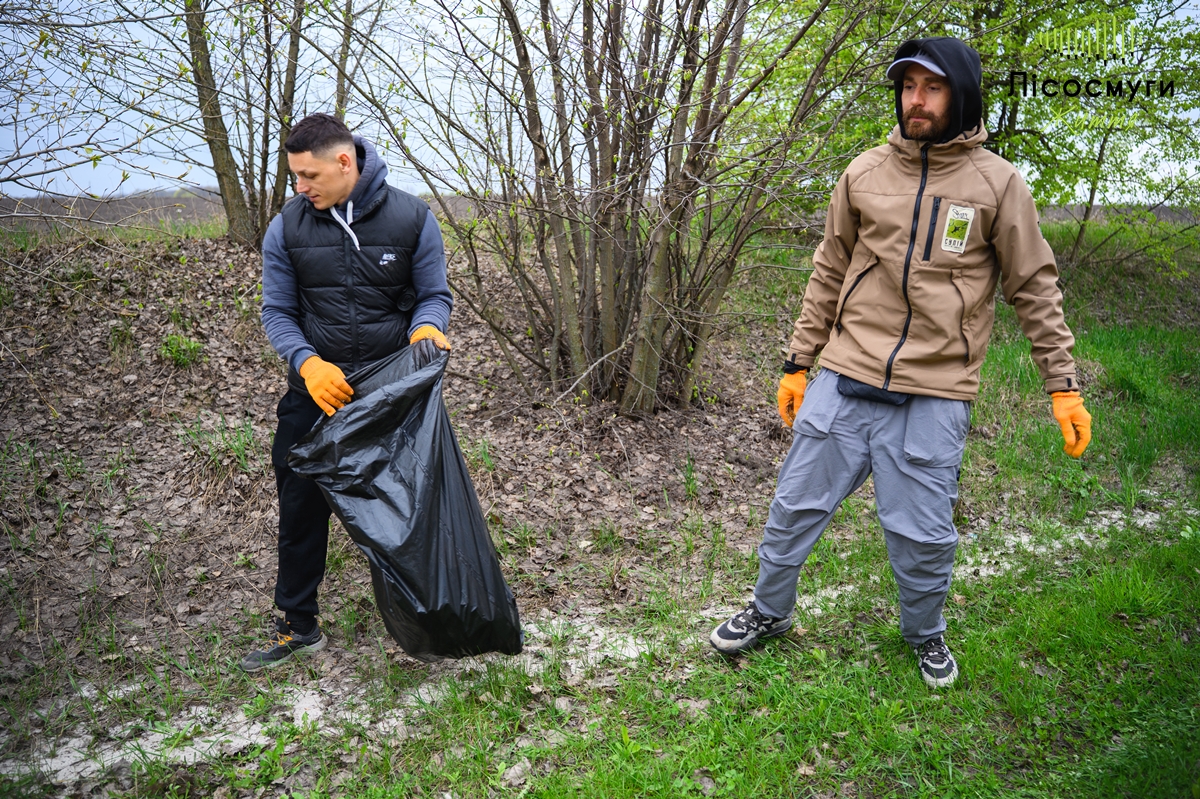
The main restoration work took place on April 23, 2026. In two hours, more than 30 participants planted 581 trees and shrubs and removed litter along the site.
Because it was not possible to mechanically prepare the soil in advance, planting locations were prepared manually during the work. The participants cleared the turf and planted the seedlings using a Kolesov planting sword, a specialized tool traditionally used for planting bare-root seedlings.
The restoration involved the project team, local residents, activists, volunteers, local council members, representatives of the city council, the municipal utility company Komunalnyk, local businesses, the Yahotyn Youth Council, and the community police. Teteriv Forestry and the NUBiP of Ukraine nursery provided planting material, while Komunalnyk will be responsible for the shelterbelt’s subsequent maintenance.
The teams from A-Cake, Grey Wolf, Impasto, Fish&Beer, and “MHP–Community” helped with planting and site clean-up. Volodymyr Salyha provided water for watering the newly planted seedlings.
Equipment Provided to the Community
For site preparation, planting, and subsequent maintenance, the community received:
- Dnipro-M 46N petrol lawn mowers – 4 units
- Dnipro-M 43 petrol brush cutters – 4 units
Photo Gallery
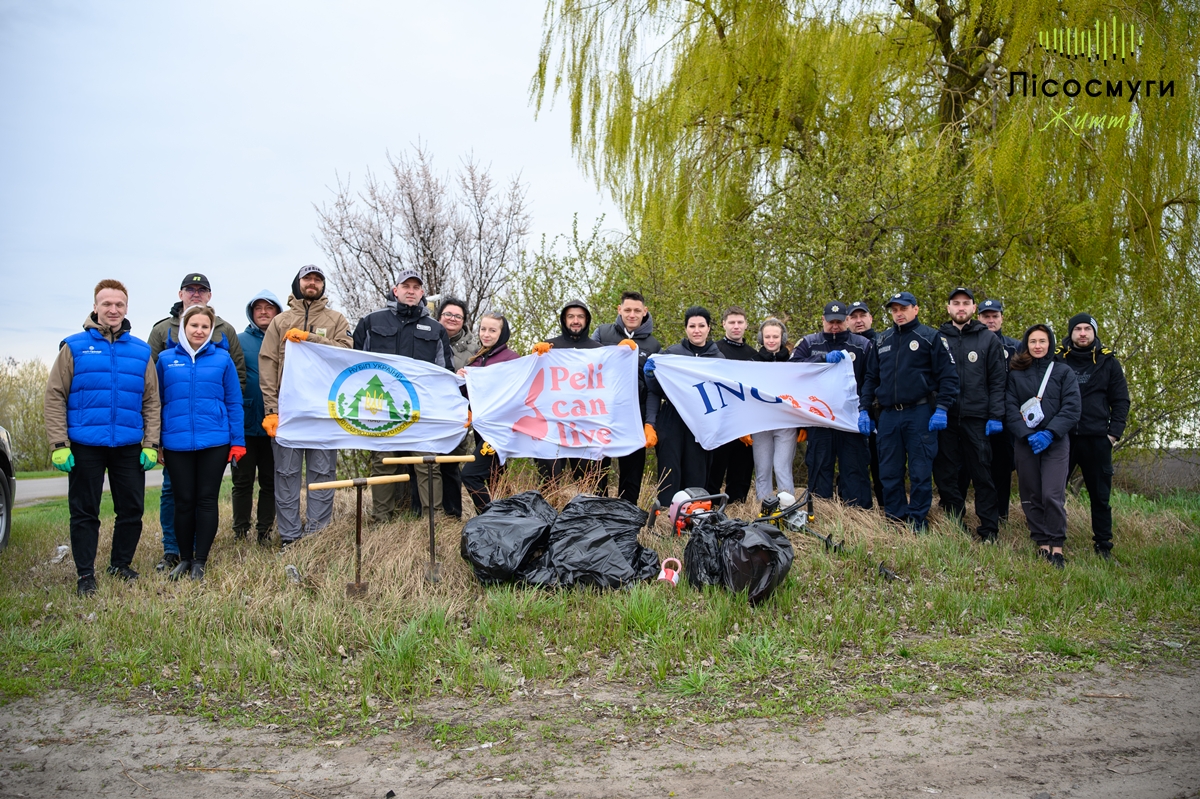
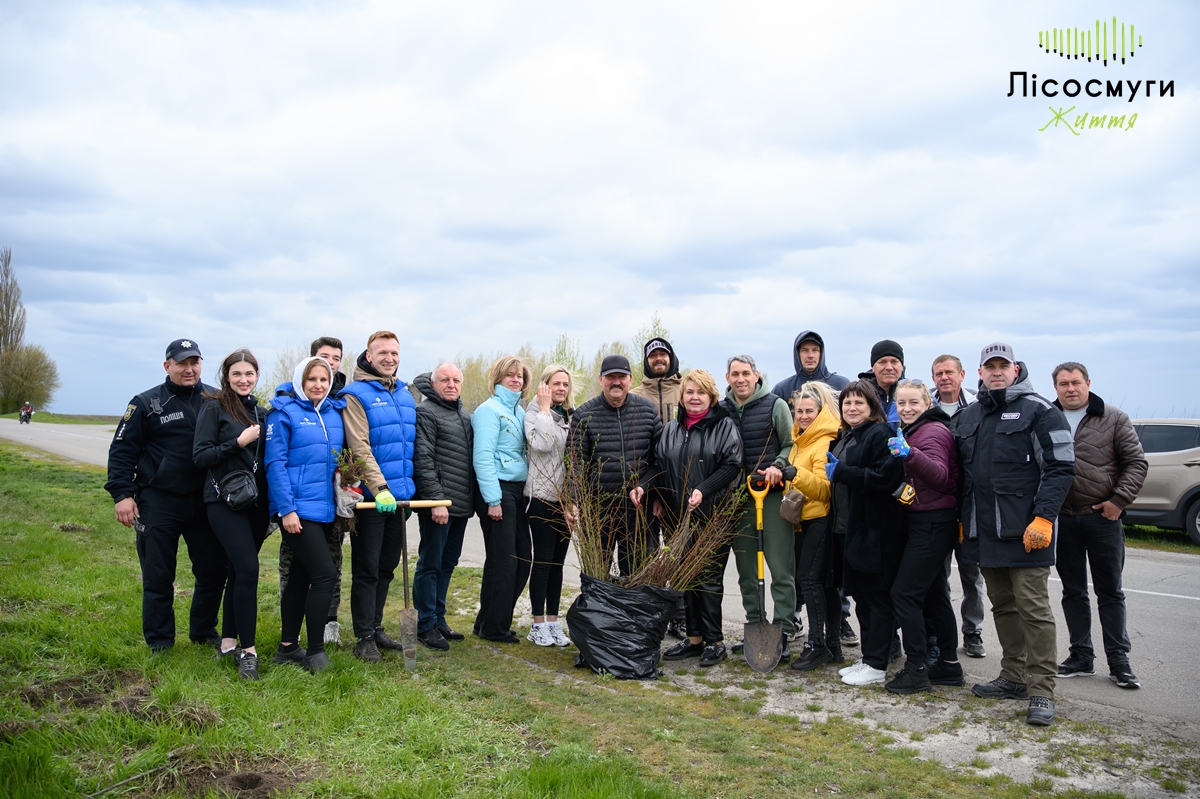
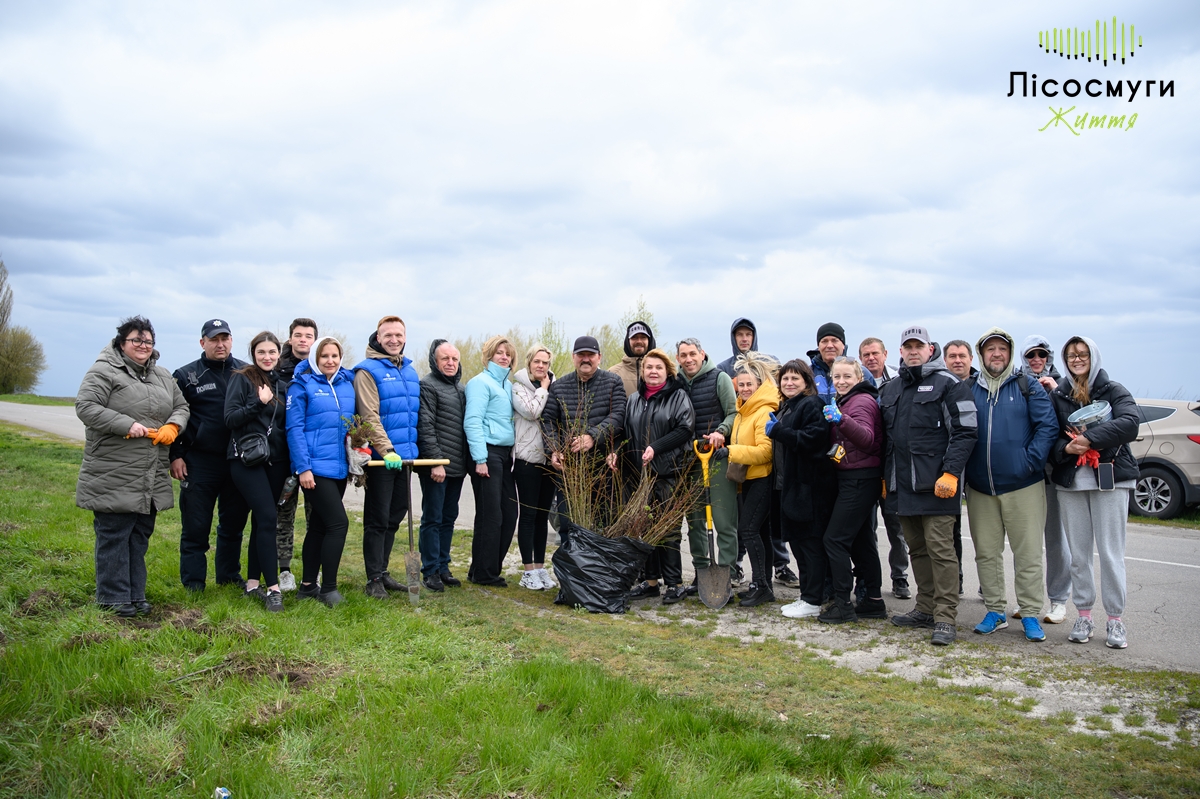
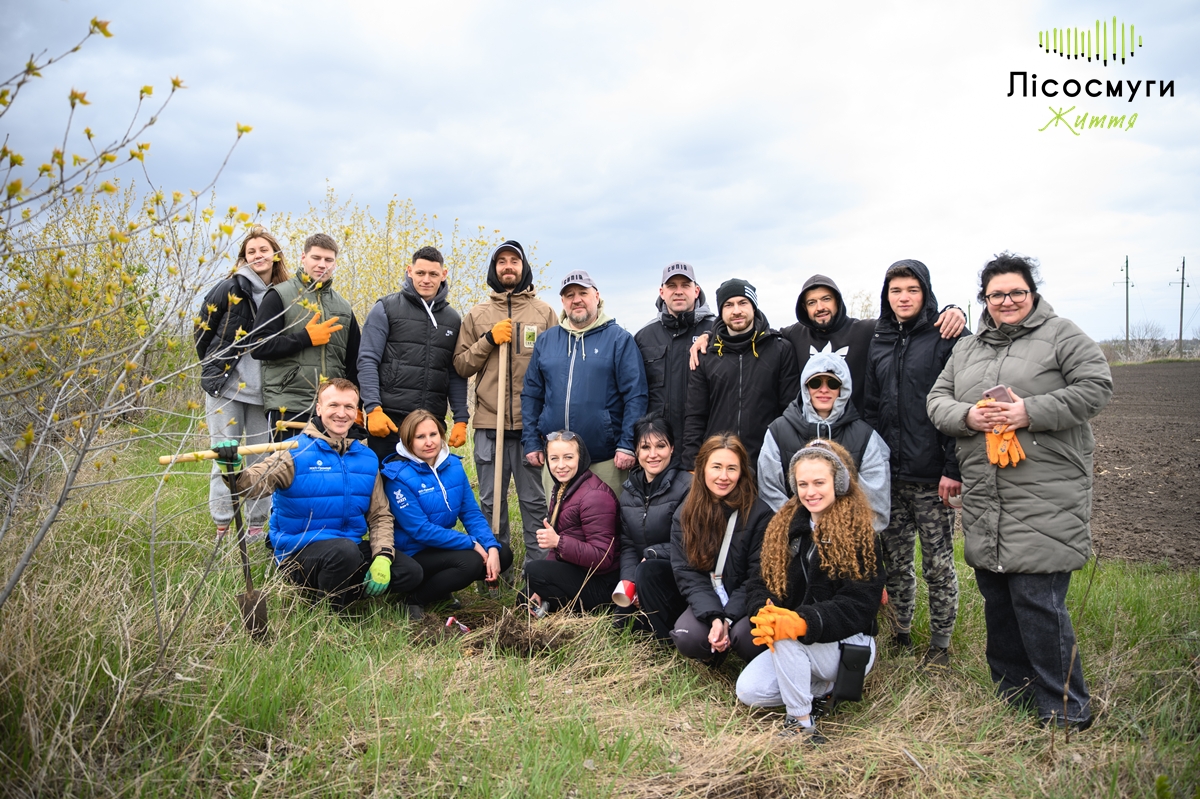
Photos: @natali_magic_ph
Monitoring and Supplementary Planting
After planting, all seedlings were marked with ribbons to enable their identification, tracking, and condition monitoring. The project provides for seven years of monitoring of the restored shelterbelt.
Shelterbelt on the Interactive Map
The Shelterbelts of Life project is implemented by the charitable foundation Peli can live in partnership with the National University of Life and Environmental Sciences of Ukraine (NUBiP of Ukraine), with financial support from ING Bank Ukraine.